Heavy Duty Rectangular Connectors: A Guide to Industrial Connectivity
Heavy duty rectangular connectors are electrical connection components used to link cables, equipment, control panels, and industrial machinery.
Their rectangular shape provides space for multiple electrical contacts within a shared housing. These connectors are commonly used in manufacturing facilities, automation equipment, transportation systems, and other environments where electrical connections must remain organized and protected.
Industrial rectangular electrical connectors developed to address the need for dependable connections between separate equipment units. Instead of connecting individual wires one at a time, a single connector assembly can accommodate multiple power, signal, and control circuits. This arrangement can simplify equipment installation, inspection, and disconnection during maintenance.
Modern connector designs are available in different sizes, contact arrangements, housing materials, and protection ratings. Heavy duty multipole connectors can carry several circuits through one assembly, while high current rectangular connectors are designed for applications requiring higher electrical current within their specified operating limits.
Main Components of Rectangular Connectors
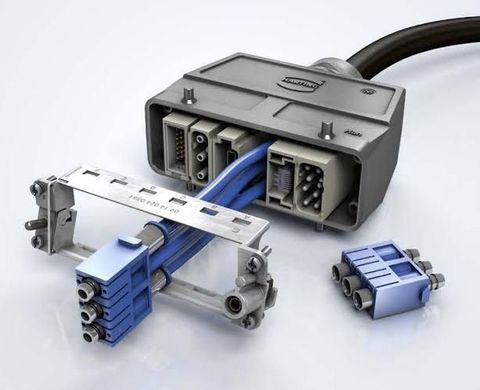
A typical heavy duty rectangular connector contains several parts that work together. The housing holds and protects the contacts, while male and female contact elements establish the electrical connection. Locking mechanisms help keep the connector halves joined, and cable glands or other entry components can help secure cables.
Industrial connector housing systems may use metal or engineered plastic, depending on environmental conditions and application requirements. Metal housings are often selected for mechanical strength, while suitable plastic housings can provide electrical insulation and reduced weight.
Other components may include seals, protective covers, grounding contacts, and replaceable inserts. Modular rectangular connector systems allow different contact arrangements to be combined within a compatible housing, subject to the manufacturer's design specifications.
Common Connector Types
Heavy duty rectangular connectors vary according to their intended application.
Power connectors carry electrical energy to machinery, motors, and equipment.
Signal connectors transmit control signals between devices.
Multipole connectors combine several electrical circuits in one assembly.
Waterproof heavy duty connectors use suitable sealing arrangements to limit water and dust entry under specified conditions.
Modular connectors accommodate different combinations of power, signal, and other compatible connection modules.
The correct type depends on electrical requirements, environmental exposure, mechanical loads, and compatibility with the equipment.
Importance
Industrial connectivity plays an important role in equipment operation, production systems, and electrical safety. A poorly matched connector can contribute to overheating, intermittent signals, damaged contacts, or unexpected equipment interruptions. Connector selection therefore involves more than checking the physical dimensions of a component.
Heavy duty electrical connectors are used in manufacturing plants, packaging machinery, industrial robots, railway equipment, energy systems, and automated production lines. They help organize electrical connections in environments where machinery may experience vibration, dust, moisture, or frequent movement.
Electrical Capacity and Safety
Current rating, voltage rating, contact resistance, and conductor size are important factors when evaluating a connector. High current rectangular connectors must be selected according to their specified electrical limits and the conditions in which they will operate.
Heat can develop when electrical contacts are overloaded, contaminated, damaged, or incorrectly assembled. Appropriate wiring, secure contact engagement, grounding, and inspection help reduce these risks. Electrical work should follow the applicable regulations and equipment instructions.
Environmental Protection and Mechanical Strength
Industrial equipment may operate in locations exposed to moisture, dust, oil, temperature changes, and vibration. Waterproof heavy duty connectors can provide protection when their sealing arrangements and stated ingress protection ratings match the surrounding conditions.
An ingress protection rating, commonly written as IP followed by two digits, describes protection against solid particles and water under defined test conditions. It does not automatically establish resistance to every chemical, temperature, or mechanical hazard.
Connector housings and locking systems also affect mechanical reliability. A suitable housing helps protect internal contacts, while an appropriate locking mechanism reduces the likelihood of accidental separation during normal operation.
Maintenance and Equipment Compatibility
Industrial power connector assemblies can make equipment separation more manageable when machinery needs inspection or replacement. However, connectors must be disconnected only under conditions permitted by their design and operating procedures.
Before selecting a replacement, technicians generally check the contact layout, voltage and current ratings, wire capacity, mounting dimensions, housing type, and environmental rating. Connectors that appear physically similar may not have compatible contacts or locking arrangements.
Recent Updates
From 2024 through 2026, industrial connector development has continued to reflect wider changes in automation, equipment modularity, and electrical system design. Rather than representing one universal change across the industry, current developments vary by application and manufacturer.
Modular Designs and Automation
Manufacturing equipment increasingly uses modular architectures in which machine sections, control units, and peripheral devices can be assembled in different configurations. Modular rectangular connector systems support this approach by allowing compatible inserts to combine different electrical functions within a common housing format.
This flexibility depends on the connector family's available modules, approved combinations, and electrical limits. Different manufacturers' components should not be assumed interchangeable merely because they share similar dimensions.
Higher Power and Data Requirements
Industrial equipment may need to carry power and control signals within increasingly compact spaces. Connector designs address these needs through different contact arrangements, insulation systems, and housing configurations.
High current rectangular connectors are relevant to equipment with substantial electrical loads, while other designs focus on signal integrity or combined power and data connections. Actual capacity depends on contact design, conductor size, temperature, and installation conditions.
Materials, Sealing, and Digital Documentation
Housing materials and sealing arrangements continue to be adapted for different industrial environments. Manufacturers may also provide digital catalogues, dimensional drawings, technical data sheets, and compatibility documentation to support component selection.
These resources help engineers compare specifications and confirm whether a connector is suitable for a particular installation. The availability of a specific feature or document varies by product range.
| Feature | Purpose | Important Consideration |
|---|---|---|
| Contact arrangement | Carries power or signals | Number and type of circuits |
| Housing material | Protects internal components | Mechanical and environmental conditions |
| Locking mechanism | Holds connector halves together | Vibration and handling requirements |
| Sealing system | Limits entry of dust or water | Specified IP rating |
| Current rating | Defines electrical capacity | Temperature and conductor size |
| Modular inserts | Combines compatible functions | Approved configurations |
Tools and Resources
Selecting industrial connectors involves comparing technical information rather than relying on appearance alone. Several resources can help explain requirements and document the selection process.
Technical Data Sheets and Connector Catalogues
Documentation from heavy duty rectangular connector manufacturers commonly includes dimensional drawings, contact layouts, electrical ratings, housing options, and installation instructions. These details help identify whether a connector fits the intended equipment.
Technical catalogues from heavy duty electrical connector suppliers may also describe compatible inserts, cable entry arrangements, mounting accessories, and replacement components. Compatibility should be confirmed using the manufacturer's documentation.
Electrical Planning and Selection Tools
Electrical design software can help engineers document wiring arrangements, circuit layouts, and connection points. Connector selection worksheets can record voltage, current, conductor size, number of contacts, operating temperature, and environmental exposure.
Useful reference materials include:
Electrical wiring diagrams showing connections between equipment.
Connector compatibility tables identifying approved combinations.
Cable sizing references for determining suitable conductor dimensions.
IP rating explanations describing enclosure protection.
Installation and inspection checklists for documenting assembly requirements.
Standards and Compliance References
International Electrotechnical Commission (IEC) publications provide standards relevant to electrical equipment and connector safety. Depending on the application, engineers may also need to consider national electrical regulations, machinery requirements, and industry-specific standards.
Industrial cable connector assemblies should be evaluated as part of the complete installation, including cables, grounding, enclosure protection, and mechanical support. Compliance depends on the applicable requirements and the actual configuration.
FAQs
What are heavy duty rectangular connectors used for?
They connect power, signal, and control circuits in industrial machinery, control panels, automation equipment, and other electrical systems. Their multi-contact design allows several circuits to share one connector assembly.
How do I choose industrial rectangular electrical connectors?
Consider voltage, current, contact count, conductor size, mounting dimensions, housing material, and environmental exposure. Confirm compatibility and operating limits using the relevant technical documentation.
Are waterproof heavy duty connectors suitable for outdoor use?
Some are suitable for outdoor environments when their specified protection ratings and materials match the conditions. Exposure to sunlight, temperature changes, chemicals, and prolonged moisture may require additional consideration.
What are modular rectangular connector systems?
These systems use compatible inserts and housings to accommodate different electrical functions. Their configuration depends on the connector family's approved combinations and electrical ratings.
How can I compare heavy duty rectangular connector manufacturers?
Compare published specifications, dimensional drawings, material details, contact arrangements, protection ratings, installation instructions, and applicable compliance information. Confirm that the selected connector matches the equipment and operating environment.
Conclusion
Heavy duty rectangular connectors provide organized electrical connections for industrial machinery, control panels, and automated equipment. Their performance depends on suitable contact arrangements, electrical ratings, housing design, environmental protection, and correct installation. Developments in modularity and equipment integration continue to influence industrial connector designs. Understanding these characteristics helps explain how industrial connectivity supports the operation and maintenance of modern equipment.

Related Post...
Industrial Soft Starter: A Complete Guide to Motor Starting Systems
Updated: October 17, 2026
Read More
Electrical Dielectric Materials: An Explore of Types and Applications
Updated: October 17, 2026
Read More
Student Visa Services: An Overview of Application Requirements and Processes
Updated: October 17, 2026
Read More