Industrial Pump Systems: An Overview of Types and Applications
Industrial pump systems are equipment arrangements used to move liquids, slurries, and other fluids through pipelines, tanks, processing units, and industrial facilities.
Industrial pumps are found in manufacturing, water treatment, chemical processing, agriculture, energy production, food processing, and many other environments where controlled fluid movement is required.
The basic purpose of an industrial pumping system is to transfer a fluid from one location to another while providing an appropriate flow rate and pressure. A system may include a pump, motor, pipes, valves, filters, sensors, controllers, and other components. The exact arrangement depends on the fluid, operating conditions, distance, pressure requirements, and process.
Industrial pumping technology has developed from relatively simple mechanical pumps into systems that can be monitored and controlled electronically. Modern industrial pump equipment can incorporate sensors and digital controls that provide information about pressure, flow, temperature, vibration, and operating conditions.
How Industrial Pump Systems Work
A pump converts mechanical energy into fluid movement. An electric motor or another drive mechanism rotates or moves a pumping element, creating the pressure difference required to move liquid through a system.
The main components can include:
- Pump assembly for moving the fluid.
- Motor or drive for providing mechanical energy.
- Pipes and fittings for directing fluid.
- Valves for controlling flow and isolation.
- Sensors for measuring operating conditions.
- Controllers for adjusting or monitoring operation.
Together, these components form an industrial pump system designed around a particular application.
Main Pump Categories
Different pump designs are used because fluids and operating conditions vary considerably. Industrial centrifugal pumps use rotating impellers to transfer energy to a fluid and are commonly associated with continuous liquid movement.
Industrial process pumps can be designed for specific manufacturing or processing conditions. Industrial chemical pumps may use materials and configurations selected for compatibility with particular chemicals, while industrial wastewater pumps are designed for liquids that can contain suspended solids or other contaminants.
Positive displacement pumps form another major category. They move a defined volume of fluid during each operating cycle and can be used when controlled flow or higher pressure is required.
| Pump Type | General Operating Principle | Common Applications |
|---|---|---|
| Centrifugal pump | Rotating impeller transfers energy to fluid | Water circulation, cooling, processing |
| Positive displacement pump | Moves defined fluid volumes | Dosing, viscous liquids, process applications |
| Diaphragm pump | Flexible diaphragm moves fluid | Chemical handling, wastewater |
| Gear pump | Rotating gears transfer fluid | Oils and other viscous liquids |
| Piston pump | Reciprocating piston moves fluid | High-pressure applications |
Importance
Industrial pumping systems are important because many industrial processes depend on reliable movement of liquids. Water, chemicals, fuels, oils, wastewater, cooling fluids, and process liquids may need to travel between storage areas and processing equipment.
The operation of these systems can affect manufacturing processes as well as public infrastructure. Industrial water pump systems, for example, can be used in water treatment facilities, cooling operations, irrigation systems, and industrial water circulation.
Supporting Industrial Processes
Industrial fluid pumping systems can move raw materials, intermediate fluids, and finished liquid products between different stages of a process. Flow requirements can vary from one application to another, making pump selection dependent on factors such as pressure, viscosity, temperature, and fluid composition.
High pressure industrial pumps are used in applications where a higher pressure level is required to move fluid through equipment or pipelines. Their operating conditions need to be matched with appropriate piping, valves, seals, and control components.
Handling Different Fluids
Not every pump can handle every type of liquid. Water generally presents different pumping requirements from corrosive chemicals, abrasive slurries, oils, or wastewater.
Industrial chemical pumps may therefore use materials compatible with the specific fluid. Industrial wastewater pumps may also incorporate designs that accommodate suspended particles or changing liquid conditions.
Energy and Operational Considerations
Pump systems consume energy because fluid movement requires mechanical work. The energy requirement depends on factors such as flow rate, pressure, fluid properties, pump efficiency, piping arrangement, and operating duration.
Industrial hydraulic pump systems use hydraulic principles to transmit and control fluid power. These systems can be found in machinery where pressurized hydraulic fluid is used to create movement or force.
Recent Updates
Between 2024 and 2026, the general direction of industrial pumping technology has included greater use of electronic monitoring, variable-speed drives, connected sensors, and automation. These developments are helping integrate pumps with broader industrial control and data systems.
Digital Monitoring and Automation
Industrial pump control systems increasingly incorporate sensors that can monitor pressure, flow, temperature, vibration, and motor conditions. The collected information can be displayed through control interfaces or integrated into wider industrial monitoring systems.
Industrial pump automation systems can adjust operating conditions according to defined process requirements. Variable-speed drives, for example, can change motor speed to support different flow requirements rather than keeping the pump at one fixed operating condition.
Connected Pump Equipment
Modern industrial pump system equipment may communicate with supervisory control systems through industrial communication networks. This allows operating information to be viewed alongside information from other machines and process equipment.
Data collection can also support condition monitoring. Changes in vibration, temperature, pressure, or flow may indicate that a pump or another component requires inspection, although interpretation depends on the specific equipment and operating environment.
Focus on Water and Resource Management
Industrial water pump systems continue to play an important role in water treatment, recycling, cooling, and industrial circulation. Greater attention to water use has encouraged the development of systems that monitor flow and integrate pumping with broader water-management processes.
Advanced industrial pumping systems may combine pumps, sensors, control devices, variable-speed drives, and data platforms into coordinated arrangements. The degree of automation varies according to application requirements.
Tools and Resources
Several tools can help users understand, design, or evaluate industrial pumping arrangements. The appropriate resource depends on whether the task involves basic learning, pump selection, hydraulic calculations, system design, or operational monitoring.
Pump and Hydraulic Calculators
Pump calculators can help estimate relationships between flow rate, pressure, pump head, and power requirements. Hydraulic calculators can also assist with understanding pressure losses through pipes, fittings, and valves.
Common calculations may involve:
- Flow rate and fluid velocity.
- Pump head requirements.
- Pressure conversion.
- Pipe friction losses.
- Hydraulic power.
- Motor power requirements.
These calculations provide estimates and may need to be reviewed against actual equipment specifications and operating conditions.
Technical Documentation
Pump manufacturers and engineering organizations publish technical manuals, dimensional drawings, operating instructions, and pump-selection information. Standards organizations also provide technical references related to pumps, piping, pressure systems, and industrial safety.
Process engineers and technicians may use these resources to understand equipment limits, installation requirements, operating conditions, and inspection procedures.
Monitoring and Control Platforms
Industrial pump control systems can be connected to programmable controllers, supervisory control platforms, and industrial data systems. These platforms may display real-time operating information and allow authorized personnel to monitor defined process parameters.
Process diagrams and equipment checklists can also help document complete industrial pump systems. Clear documentation can show how pumps, valves, sensors, tanks, and pipelines interact.
FAQs
What are industrial pump systems used for?
Industrial pump systems are used to move liquids and other fluids through industrial processes. Applications include water circulation, chemical processing, wastewater handling, cooling, manufacturing, and hydraulic equipment.
What are industrial centrifugal pumps?
Industrial centrifugal pumps use a rotating impeller to transfer energy to a fluid. They are commonly used for moving liquids where continuous flow is required.
How do industrial chemical pumps differ from other pumps?
Industrial chemical pumps are designed with consideration for the chemical properties of the fluid being handled. Material compatibility, temperature, pressure, flow requirements, and containment are important factors.
What are industrial pump automation systems?
Industrial pump automation systems use controllers, sensors, drives, and software to monitor or regulate pump operation. Depending on the system design, automation can adjust flow, respond to process conditions, and record operating information.
What factors affect industrial pump selection?
Important factors include fluid type, flow rate, pressure or head, temperature, viscosity, solids content, materials compatibility, operating environment, and the arrangement of connected piping and equipment.
Conclusion
Industrial pump systems provide controlled movement of fluids across manufacturing, water treatment, chemical processing, hydraulic, and other industrial applications. Different pump designs are used because fluids, pressures, flow requirements, and operating environments vary. Current industrial pumping systems increasingly incorporate sensors, electronic controls, variable-speed drives, and connected monitoring technologies. Understanding pump types, system components, operating conditions, and application requirements provides a foundation for understanding modern industrial fluid movement.

Related Post...
Laboratory Washer Sterilizer: An Overview of Cleaning and Sterilization Systems
Updated: September 16, 2026
Read More
Gravity Roller Conveyors: An Overview of Design and Material Handling Uses
Updated: September 16, 2026
Read More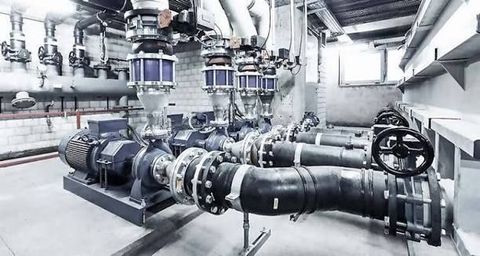
Industrial Pump Systems: An Overview of Types and Applications
Updated: September 16, 2026
Read More