Data Center Liquid Cooling Systems: Types, Components, and Uses
Data center liquid cooling systems are thermal management systems designed to remove heat from servers, processors, accelerators, and other high-density computing equipment.
As computing hardware produces more heat within smaller spaces, liquid-based cooling can provide a direct method of transferring heat away from electronic components.
Unlike conventional air cooling, which relies primarily on airflow, liquid cooling uses a fluid to absorb and transport heat. Depending on the design, the liquid may circulate through cold plates attached to processors or directly contact electronic components inside specialized immersion systems.
What Are Data Center Liquid Cooling Systems?
Data center liquid cooling systems use a circulating liquid to capture heat generated by computing equipment and transfer that heat to another cooling medium or heat-rejection system.
A typical system can include:
- Cold plates
- Coolant distribution units
- Pumps
- Heat exchangers
- Manifolds
- Supply and return piping
- Coolant reservoirs
- Sensors
- Control systems
- Heat-rejection equipment
The exact configuration depends on rack density, processor thermal load, facility design, coolant type, and cooling architecture.
Why Liquid Cooling Is Used in Data Centers
Modern computing equipment can produce substantial heat, particularly in high-performance computing, artificial intelligence, machine learning, scientific computing, and other computationally intensive applications.
Liquid cooling can provide several technical advantages:
- Direct heat transfer from high-heat components
- Higher heat-transfer capacity than air in many applications
- Support for high-density server configurations
- Reduced dependence on large volumes of room air
- More controlled processor temperatures
- Integration with facility water or heat-rejection systems
Liquid cooling does not necessarily replace all air cooling. Many data centers use hybrid arrangements in which liquid cooling handles major processor loads while air cooling manages remaining components.
Types of Data Center Liquid Cooling Systems
Direct-to-Chip Liquid Cooling
Direct-to-chip cooling places a cold plate directly against heat-generating components such as CPUs, GPUs, or other accelerators.
Coolant flows through channels inside the cold plate and absorbs heat from the component. The heated fluid then travels to a heat exchanger or coolant distribution unit.
This approach can be integrated into conventional server racks while adding a dedicated liquid circuit.
Single-Phase Immersion Cooling
In single-phase immersion cooling, servers or selected electronic components are immersed in a non-conductive liquid.
The liquid remains in the same physical phase during operation. Pumps or natural convection move heated fluid toward a heat exchanger where the heat is transferred to another cooling circuit.
Two-Phase Immersion Cooling
Two-phase immersion cooling uses a specially selected dielectric fluid that changes from liquid to vapor as it absorbs heat.
The vapor rises toward a condenser, where it releases heat and returns to liquid form. The liquid then returns to the immersion tank.
Rear-Door Heat Exchangers
Rear-door heat exchangers are installed at the back of server racks. They capture heat from the exhaust air and transfer it to a liquid cooling circuit.
This approach can reduce the amount of heat released into the data center room without requiring liquid to circulate directly through individual server components.
Hybrid Liquid Cooling
Hybrid systems combine liquid cooling with conventional air cooling. Liquid circuits can handle high-heat processors, while fans and room-level systems manage memory, storage, networking equipment, power components, and other heat sources.
Main Components of Liquid Cooling Systems
| Component | Main Function |
|---|---|
| Cold plate | Transfers heat from processors to coolant |
| Coolant distribution unit | Controls and distributes cooling fluid |
| Pump | Circulates coolant |
| Heat exchanger | Transfers heat between fluid circuits |
| Manifold | Distributes coolant to multiple servers |
| Supply piping | Delivers cooled fluid |
| Return piping | Carries heated fluid away |
| Reservoir | Stores or accommodates coolant volume |
| Sensors | Monitor temperature, pressure, and flow |
| Control system | Regulates cooling operation |
| Leak detection system | Identifies potential coolant leaks |
| Heat rejection equipment | Removes heat from the cooling loop |
How Data Center Liquid Cooling Works
1. Heat Generation
Processors and other electronic components generate heat during operation. High-performance processors can produce substantial thermal loads.
2. Heat Transfer to the Coolant
In a direct-to-chip system, heat moves from the processor through a thermal interface material into a cold plate.
The coolant flowing through the cold plate absorbs the heat.
3. Heated Coolant Movement
The heated coolant leaves the server through the return circuit. Pumps maintain the required flow through the cooling network.
4. Heat Exchange
The coolant passes through a heat exchanger or coolant distribution unit. Heat is transferred from the technology cooling loop to a facility water loop or another heat-rejection circuit.
5. Heat Rejection
The facility cooling system removes the transferred heat through equipment such as dry coolers, cooling towers, chillers, or other heat-rejection technologies.
6. Coolant Recirculation
The cooled fluid returns to the server racks, completing the cooling cycle.
Coolants Used in Data Center Systems
Different liquid cooling architectures use different fluids.
Water-Based Coolants
Water has high heat capacity and is widely used in indirect cooling circuits. Treated water or water-glycol mixtures may be selected according to system requirements.
Dielectric Fluids
Immersion cooling systems use electrically non-conductive fluids that can come into direct contact with electronic components.
The fluid must be compatible with electronics, seals, plastics, metals, and other materials within the cooling system.
Factors Affecting System Design
Rack Density
Higher rack power density generally increases the amount of heat that must be removed from a specific area.
Processor Thermal Design
CPU, GPU, accelerator, and other processor characteristics influence cold-plate design and coolant requirements.
Coolant Flow Rate
Flow rate affects the amount of heat that can be transported through the liquid circuit. Pumps and piping must be sized according to the required flow.
Coolant Temperature
Supply temperature affects the temperature difference available for heat transfer. The appropriate temperature range depends on equipment specifications and facility conditions.
Facility Infrastructure
Liquid cooling may require dedicated piping, pumps, heat exchangers, water treatment, leak detection, and heat-rejection equipment.
Applications of Data Center Liquid Cooling
Artificial Intelligence and Machine Learning
AI workloads can use large numbers of high-performance GPUs or specialized accelerators. Liquid cooling can help manage the thermal loads associated with dense computing configurations.
High-Performance Computing
Scientific simulations, engineering calculations, weather modeling, and other high-performance workloads can generate substantial heat.
Cloud Computing
Cloud infrastructure can use liquid cooling in selected high-density server environments where conventional cooling approaches are insufficient or less suitable.
Enterprise Data Centers
Enterprise facilities can adopt liquid cooling for specific high-power racks or specialized computing clusters without necessarily converting the entire facility to immersion cooling.
Edge Computing
Some compact computing environments have limited space for conventional cooling infrastructure. Liquid-based thermal management can be considered where equipment density and environmental conditions require it.
Monitoring and Control
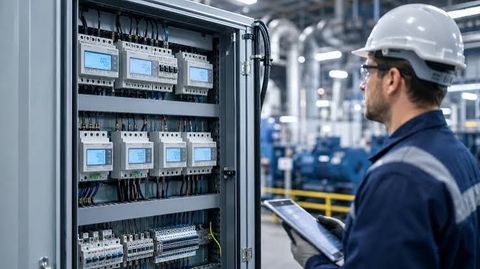
Data center liquid cooling systems use sensors and control equipment to monitor operating conditions.
Common measurements include:
- Coolant supply temperature
- Coolant return temperature
- Flow rate
- Pressure
- Pump speed
- Heat exchanger temperature
- Rack temperature
- Leak detection status
Automated controls can adjust pump speed, valves, cooling capacity, and other parameters according to the thermal load.
Data can be integrated with data center infrastructure management systems to provide centralized visibility of cooling performance.
Maintenance Requirements
Regular maintenance is important for maintaining liquid cooling performance.
Cooling loops should be inspected for leaks, corrosion, deposits, and changes in pressure or flow. Filters and strainers should be checked according to system requirements.
Coolant quality may also need periodic testing for contamination, chemical balance, conductivity, or other relevant properties.
Pumps, valves, heat exchangers, manifolds, and cold plates should be inspected according to manufacturer specifications. Leak detection sensors should also be tested periodically.
Safety Considerations
Liquid cooling introduces additional considerations compared with conventional air cooling. A leak can potentially affect electronic equipment, infrastructure, or personnel, depending on the coolant and system design.
Important measures can include:
- Leak detection sensors
- Automatic isolation valves
- Appropriate piping materials
- Pressure monitoring
- Coolant compatibility checks
- Proper electrical isolation
- Spill containment where applicable
- Preventive inspection
For immersion systems, coolant handling procedures should account for the specific properties of the dielectric fluid.
Advantages and Limitations
| Aspect | Liquid Cooling |
|---|---|
| Heat transfer | Direct and efficient for high-heat components |
| High-density computing | Well suited to selected high-density configurations |
| Cooling medium | Water-based or dielectric fluids |
| Infrastructure | Requires liquid distribution components |
| Monitoring | Temperature, pressure, flow, and leak monitoring |
| Maintenance | Includes fluid and mechanical-system inspection |
| Air cooling requirement | May be reduced but not always eliminated |
| Applications | AI, HPC, cloud, enterprise, and specialized computing |
Liquid cooling can support higher thermal loads, but implementation requires careful integration between IT equipment and facility infrastructure.
FAQs
What are data center liquid cooling systems used for?
They are used to remove heat from servers, CPUs, GPUs, accelerators, and other high-density computing equipment using circulating liquid.
What are the main types of liquid cooling?
Common approaches include direct-to-chip cooling, single-phase immersion cooling, two-phase immersion cooling, rear-door heat exchangers, and hybrid liquid cooling.
What is direct-to-chip cooling?
Direct-to-chip cooling uses cold plates attached to heat-generating processors. Coolant flows through the cold plates and carries heat away from the components.
Does liquid cooling completely replace air cooling?
Not necessarily. Hybrid systems often use liquid cooling for high-heat processors while air cooling handles other components and residual room heat.
How are liquid cooling systems monitored?
Sensors can measure coolant temperature, pressure, flow, pump operation, and leaks. Automated controls can adjust cooling equipment according to changing thermal loads.
Conclusion
Data center liquid cooling systems provide a method for managing the increasing thermal loads associated with high-density computing. Direct-to-chip cooling, immersion cooling, rear-door heat exchangers, and hybrid systems use different approaches to transfer heat from IT equipment into a liquid cooling circuit.
System design depends on rack density, processor characteristics, coolant properties, flow requirements, facility infrastructure, and heat-rejection capacity. Proper monitoring, leak detection, coolant management, and maintenance are important for maintaining reliable operation.

Related Post...
Automatic Labeling Systems: An Overview of Modern Labeling Technology
Updated: September 23, 2026
Read More