How Industrial Ball Mills Work: A Complete Guide
Industrial ball mills are rotating grinding machines used to reduce the size of solid materials through repeated impact and abrasion.
They are widely used in mineral processing, cement production, ceramics, chemicals, building materials, and other industrial applications where controlled particle-size reduction is required.
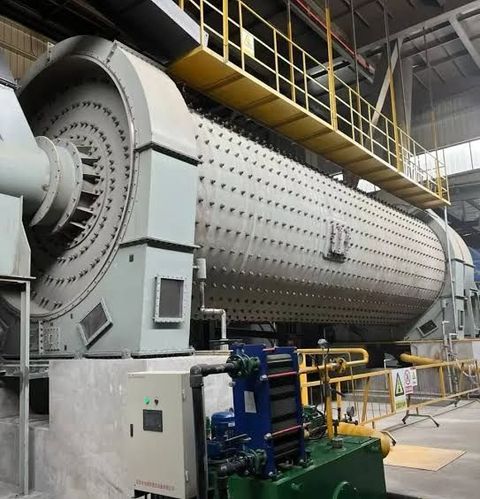
A typical ball mill contains a rotating cylindrical chamber filled partly with grinding media. As the chamber rotates, the media and material are lifted and then fall or roll, creating forces that gradually reduce the material into smaller particles.
Why Industrial Ball Mills Matter
Particle-size reduction is an important stage in many industrial processes. Materials may need to be ground before classification, mixing, chemical processing, sintering, or further mineral treatment.
Industrial grinding mills allow operators to process large quantities of material under controlled operating conditions. Mill size, rotation speed, grinding media, feed characteristics, and operating conditions all influence the final grinding result.
Ball mills can also be configured for different material types and processing arrangements, including wet and dry grinding.
How Industrial Ball Mills Work
The basic operating principle is relatively simple, although industrial systems can involve sophisticated controls.
1. Material Feeding
Raw material enters the mill through a controlled feed system. Feed size and consistency can influence grinding performance.
Oversized particles may require crushing before entering the ball mill.
2. Grinding Chamber Rotation
The cylindrical shell rotates around its axis. Grinding media inside the chamber move with the rotating shell and eventually fall or roll through the material.
3. Impact and Abrasion
Two primary mechanisms contribute to size reduction:
- Impact: Grinding media strike particles and break them into smaller pieces.
- Abrasion: Material is reduced through rubbing and friction between particles and grinding media.
The balance between these mechanisms depends on mill speed, filling level, media size, and material characteristics.
4. Material Discharge
Once the material reaches the desired processing stage, it exits through the mill discharge system. The resulting material may then move to classification, separation, or another downstream process.
Main Types of Industrial Ball Mills
Wet Ball Mills
Wet ball mills use liquid, commonly water or another process medium, during grinding. The liquid can help transport material through the mill and may be appropriate for processes where slurry handling is part of the overall operation.
Dry Ball Mills
Dry ball mills operate without adding liquid to the grinding process. They can be used where the final product must remain dry or where downstream processing requires dry material.
Batch Ball Mills
Batch mills process a defined quantity of material before discharge. They can be suitable for applications involving different materials or production batches.
Continuous Ball Mills
Continuous mills receive material and discharge processed material continuously. They are commonly integrated into larger industrial production lines.
Industrial Ball Mills Comparison
| Mill Type | Operating Method | Typical Application |
|---|---|---|
| Wet ball mill | Grinding with liquid | Slurry-based processing |
| Dry ball mill | Grinding without liquid | Dry material processing |
| Batch ball mill | Processes defined batches | Flexible production |
| Continuous ball mill | Continuous feed and discharge | Large-scale processing |
| Overflow mill | Material exits through overflow | Fine grinding applications |
| Grate discharge mill | Discharge through grate system | Controlled material removal |
Key Components of Ball Milling Equipment
Several components work together to maintain grinding performance.
Mill Shell
The cylindrical shell contains the grinding media and material. Its internal lining protects the shell and can influence material movement.
Grinding Media
Grinding media may consist of steel balls, ceramic balls, or other suitable materials. Media diameter and material composition affect the grinding process.
Drive System
The motor and drive assembly rotate the mill at a controlled speed. Industrial systems may use gear drives or other transmission arrangements.
Liners
Internal liners protect the mill shell from wear. Different liner profiles can influence how grinding media move inside the chamber.
Feed and Discharge Systems
These systems regulate material entering and leaving the mill. Their design depends on whether the mill operates in batch or continuous mode.
Factors Affecting Grinding Performance
Feed Size
Smaller feed particles generally require less size-reduction work than larger particles. Crushing before grinding can therefore influence overall process efficiency.
Grinding Media Size
Larger media can provide stronger impact forces, while smaller media can provide more contact points for finer grinding. The appropriate combination depends on the material and target particle size.
Mill Speed
Rotation speed affects how grinding media move inside the chamber. Operating too slowly or too quickly can change the balance between cascading and impact movement.
Filling Level
The quantity of material and grinding media inside the mill influences movement and contact. Proper loading helps maintain predictable grinding conditions.
Material Properties
Hardness, moisture, abrasiveness, density, and particle structure all influence grinding behavior.
Automation and Process Control
Modern ball milling equipment can incorporate sensors and control systems for monitoring operating conditions. Measurements may include motor load, mill speed, bearing temperature, vibration, feed rate, and other process variables.
Automated control can help operators maintain stable operating conditions and identify abnormal changes. Condition monitoring can also support planned maintenance by tracking equipment behavior over time.
Industrial Applications
Industrial ball mills are used across several sectors:
- Mining and mineral processing for ore grinding
- Cement production for clinker and material grinding
- Ceramics for preparing ceramic materials
- Chemical processing for selected material reduction
- Building materials for grinding mineral components
- Powder processing where controlled particle sizes are required
The appropriate mill configuration depends on the material and the required final particle characteristics.
Maintenance and Safety
Regular maintenance helps maintain reliable operation. Important activities include inspecting liners, checking grinding media, monitoring bearings, examining drive components, and checking lubrication systems.
Operators should also monitor vibration, temperature, unusual noise, and other signs of abnormal operation. Lockout procedures should be followed before maintenance activities involving moving machinery.
Frequently Asked Questions
What are industrial ball mills used for?
Industrial ball mills are used to reduce solid materials into smaller particles through impact and abrasion. They are common in mineral processing, cement, ceramics, and other industries.
What is the difference between wet and dry ball mills?
Wet ball mills use a liquid during grinding, while dry ball mills operate without process liquid. The appropriate configuration depends on material characteristics and downstream processing requirements.
What grinding media are used in ball mills?
Steel balls, ceramic balls, and other specialized media can be used. Media selection depends on the material, desired particle size, contamination requirements, and grinding conditions.
What affects ball mill grinding efficiency?
Feed size, mill speed, grinding media size, filling level, material properties, moisture, and operating conditions can all influence grinding performance.
Can industrial ball mills be automated?
Yes. Industrial ball mills can incorporate sensors, process controls, monitoring systems, variable-speed drives, and automated feed-control technologies.
Conclusion
Industrial ball mills provide a versatile method for controlled material grinding through impact and abrasion. Wet, dry, batch, continuous, overflow, and grate-discharge configurations can be selected according to specific processing requirements.
Mill size, grinding media, rotation speed, feed characteristics, filling level, and process controls all influence performance. When these factors are matched to the material and target particle size, ball milling can form an important stage in mineral, cement, ceramic, chemical, and other industrial processing operations.

Related Post...