How Jib Crane Equipment Works: A Complete Guide
Jib crane equipment is designed to lift, lower, and move loads within a defined working area.
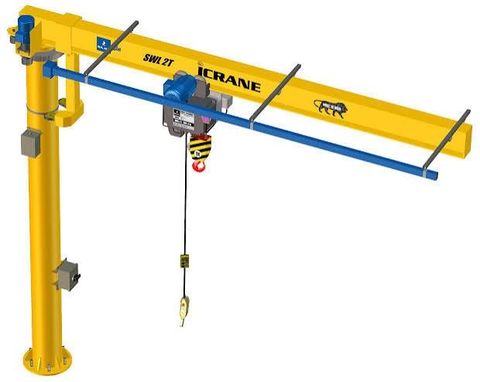
A typical jib crane consists of a vertical support, horizontal or angled jib arm, hoist, trolley, and control system. The jib arm can rotate around its mounting point, allowing materials to be positioned at different locations within the crane's operating radius.
Jib cranes are used in manufacturing plants, workshops, warehouses, maintenance areas, loading zones, and other industrial environments. Their configuration can range from compact workstation systems to larger floor-mounted structures designed for heavier loads.
Why Jib Crane Equipment Matters
Material handling often requires loads to be moved between machines, workstations, storage areas, and assembly positions. A jib crane provides localized lifting and positioning without requiring the full coverage area of a large overhead crane.
Common applications include:
- Moving components between workstations
- Positioning machinery parts
- Handling tools and fixtures
- Loading and unloading materials
- Supporting assembly operations
- Moving maintenance components
- Lifting dies, molds, and equipment
- Handling loads within defined work zones
The appropriate jib crane depends on load capacity, boom length, rotation range, lifting height, duty cycle, mounting arrangement, and operating environment.
How Jib Crane Equipment Works
A jib crane operates through coordinated movement between its supporting structure, jib arm, hoist, trolley, and controls.
1. Load Attachment
The process begins by connecting the load to the hoist hook or an appropriate lifting accessory.
Slings, lifting beams, clamps, or other attachments may be used depending on the shape and characteristics of the load. The attachment method must be compatible with the load and the crane's rated configuration.
2. Hoisting
The hoist raises or lowers the load. Depending on the crane design, the hoist can be electric, pneumatic, hydraulic, or manual.
The lifting mechanism typically uses a chain or wire rope connected to a hook.
3. Trolley Movement
Some jib cranes use a trolley that travels along the horizontal jib arm. The trolley changes the radial position of the load relative to the crane's vertical support.
Trolley movement can be manual or powered depending on the crane design.
4. Jib Rotation
The jib arm rotates around its vertical support. This rotation allows the suspended load to move horizontally through an arc.
Rotation may be manual or powered. The available rotation range depends on the crane configuration and surrounding workspace.
5. Load Positioning
The operator combines hoisting, trolley movement, and jib rotation to place the load at the required location.
Controlled movement is particularly useful when components need to be positioned accurately at machines, workstations, or assembly areas.
Main Types of Jib Crane Equipment
Jib cranes can be categorized according to their mounting method and operating arrangement.
Floor-Mounted Jib Cranes
Floor-mounted jib cranes are supported by a foundation or base structure attached to the floor.
They can provide a dedicated lifting area and are commonly used in manufacturing plants, workshops, and material-handling zones.
Wall-Mounted Jib Cranes
Wall-mounted jib cranes attach to a suitable structural wall or column.
They can provide localized lifting coverage while leaving floor space available for other activities.
Freestanding Jib Cranes
Freestanding jib cranes use an independent vertical support structure mounted to the floor or foundation.
Their placement can be selected according to the required work area and surrounding equipment.
Mast-Style Jib Cranes
Mast-style systems use a vertical mast to support the jib. Depending on the design, the mast can be connected to the floor, ceiling, or another structural element.
Articulating Jib Cranes
Articulating jib cranes use a multi-section boom that can provide movement around obstacles or into areas that may not be accessible with a conventional straight boom.
Comparison of Jib Crane Types
| Jib Crane Type | Mounting Arrangement | Typical Application | Main Characteristic |
|---|---|---|---|
| Floor-mounted | Floor or foundation | Workshops and plants | Dedicated lifting zone |
| Wall-mounted | Wall or structural column | Workstations | Saves floor space |
| Freestanding | Independent base | Manufacturing areas | Flexible placement |
| Mast-style | Vertical mast | Industrial work areas | Structural support through mast |
| Articulating | Multi-section boom | Restricted or complex areas | Extended positioning flexibility |
Main Components of Jib Crane Equipment
Vertical Support
The vertical support carries the jib structure and transfers lifting and operational forces into the supporting structure or foundation.
Jib Arm
The jib arm provides the horizontal working reach. Its length influences the crane's operating radius.
Hoist
The hoist raises and lowers the load using a chain, wire rope, or another lifting mechanism.
Trolley
The trolley carries the hoist and can move along the jib arm when the crane design includes trolley travel.
Hook
The hook connects the load or lifting accessory to the hoist.
Slewing Mechanism
The slewing arrangement allows the jib arm to rotate around its vertical axis. Depending on the crane, rotation may be manual or powered.
Controls
Controls allow the operator to operate lifting, lowering, trolley movement, and powered rotation where applicable.
Braking System
Brakes control hoisting and other powered movements and help hold the load when motion stops.
Limit Devices
Limit switches or other protective devices can restrict movement beyond predefined operating positions.
Factors Affecting Jib Crane Selection
Several factors should be considered before selecting a jib crane.
Load Capacity
The crane must have an appropriate rated capacity for the loads it will handle. The weight of lifting accessories should also be considered when determining the lifting configuration.
Boom Length
The jib length determines the crane's horizontal reach. Longer booms provide a larger working radius but can also create greater structural demands.
Lifting Height
Required hook height affects the selection of the mast, boom position, hoist, and available vertical clearance.
Rotation Range
Jib cranes can have limited, partial, or extensive rotation depending on their configuration. The required movement should be considered in relation to surrounding equipment and structures.
Duty Cycle
The frequency and duration of lifting operations affect component selection. Repetitive applications can place greater demands on motors, brakes, bearings, and structural components.
Mounting Structure
Wall-mounted and floor-mounted cranes require supporting structures capable of handling the relevant loads and forces.
Automation and Monitoring
Some jib crane systems can incorporate sensors, powered movement, remote controls, and monitoring systems.
Possible monitoring parameters include:
- Load weight
- Hoist motor condition
- Operating cycles
- Hook position
- Trolley position
- Rotation angle
- Motor temperature
- System faults
Automated positioning can be integrated into selected manufacturing workflows. Sensors can also provide operational information that supports inspection and maintenance planning.
Applications of Jib Crane Equipment
Jib cranes are used across many industrial environments.
Manufacturing
Jib cranes can move components between machines, assembly stations, and production areas.
Workshops
They can assist with positioning motors, pumps, tools, fixtures, and other heavy components during maintenance or assembly.
Warehouses
Localized jib cranes can support loading, unloading, and material positioning within designated work areas.
Maintenance Areas
Maintenance teams can use jib cranes to position machinery components during equipment inspection and repair activities.
Loading Zones
Jib cranes can be installed near loading areas where materials need to be lifted and positioned within a defined radius.
Assembly Operations
Components can be moved into assembly positions using controlled hoisting and jib rotation.
Maintenance Requirements
Regular inspection helps identify wear and mechanical problems before they affect operation.
Important inspection points include:
- Hoist chain or wire rope
- Hooks and hook latches
- Jib arm
- Structural connections
- Bearings
- Trolley wheels
- Brakes
- Limit switches
- Electrical controls
- Mounting bolts and foundation connections
Operators should watch for unusual noise, excessive vibration, uneven movement, damaged lifting components, and changes in brake behavior.
Lubrication and component replacement should follow the equipment manufacturer's maintenance instructions and applicable inspection requirements.
Safety Considerations
Jib cranes handle suspended loads and therefore require controlled operation. Loads should remain within the crane's rated capacity and should be attached using suitable lifting accessories.
Operators should maintain awareness of the crane's rotation area and keep people clear of suspended loads. Sudden side loading, shock loading, and unauthorized lifting configurations should be avoided.
The supporting structure must also be appropriate for the crane. Floor foundations, columns, walls, mounting bolts, and structural connections should be evaluated according to the crane design and applicable requirements.
Emergency controls, brakes, limit devices, hooks, chains, wire ropes, and other protective components should be inspected regularly.
FAQs
What is jib crane equipment?
Jib crane equipment is a lifting system consisting of a supporting structure, rotating jib arm, hoist, and related components used to lift and position loads within a defined work area.
What are the main types of jib cranes?
Common configurations include floor-mounted, wall-mounted, freestanding, mast-style, and articulating jib cranes. The appropriate configuration depends on workspace, load requirements, and structural conditions.
How does a jib crane move a load?
The hoist raises or lowers the load, while the trolley can move the hoist along the jib. The jib itself rotates around its vertical support to position the load within its operating radius.
What determines jib crane capacity?
Capacity depends on the crane's engineered design, mounting arrangement, boom dimensions, hoist rating, structural components, and operating configuration.
Can jib cranes rotate?
Yes. Jib cranes are designed to rotate through a defined arc. The available rotation range depends on the crane configuration and may be manual or powered.
Conclusion
Jib crane equipment provides localized lifting and positioning for industrial material-handling tasks. Its main components include the supporting structure, jib arm, hoist, trolley, hook, slewing mechanism, controls, brakes, and protective devices.
Selecting a suitable system requires consideration of load capacity, boom length, lifting height, rotation range, duty cycle, and mounting structure. Regular inspection and controlled operation are also important for maintaining safe and consistent lifting performance.

Related Post...