How Landscape Construction Products Work: A Complete Guide
Landscape construction products are materials and components used to develop, organize, protect, and improve outdoor spaces.
They support features such as pathways, patios, retaining walls, drainage systems, garden borders, outdoor structures, lighting, and other landscape elements.
These products can be made from concrete, natural stone, brick, wood, metal, plastic, composite materials, and other engineered materials. Their selection depends on the purpose of the landscape feature, ground conditions, climate, drainage requirements, expected loads, and design requirements.
What Are Landscape Construction Products?
Landscape construction products are physical materials and systems used during the construction or installation of outdoor environments. They can provide structural support, surface coverage, drainage, separation, erosion control, access, and visual organization.
Common categories include:
- Paving products
- Landscape edging
- Retaining wall systems
- Drainage products
- Outdoor steps
- Decking materials
- Garden walls
- Soil stabilization products
- Geotextiles
- Outdoor lighting components
- Irrigation components
- Landscape structures
Some products are primarily decorative, while others perform structural or functional roles.
How Landscape Construction Products Work
Landscape construction generally combines several products to create a complete outdoor system.
1. Site Assessment
The site is evaluated for soil type, slope, drainage, existing vegetation, groundwater, access, and intended use.
This information helps determine which construction materials and installation methods are suitable.
2. Ground Preparation
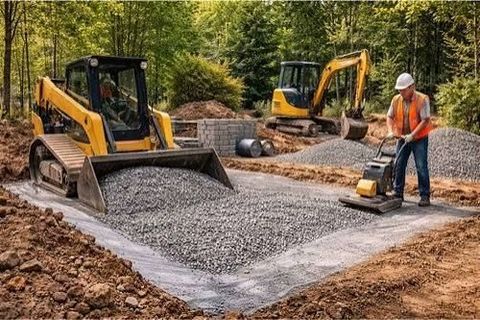
The installation area is cleared and prepared. Depending on the project, this may involve excavation, grading, soil improvement, compaction, and removal of unsuitable material.
3. Base Installation
Many landscape features require a stable base. Crushed stone, aggregate, sand, concrete, or other base materials may be used depending on the application.
4. Product Installation
The selected landscape products are installed according to the intended design. Pavers may be placed over a prepared base, while retaining wall blocks may be stacked or connected to create a stable wall.
5. Drainage Integration
Drainage channels, pipes, gravel layers, catch basins, or permeable surfaces can be incorporated to manage water movement.
6. Finishing
Joint materials, edging, surface finishes, soil, plants, lighting, and other components are added to complete the landscape area.
Main Types of Landscape Construction Products
| Product Category | Main Purpose | Common Applications |
|---|---|---|
| Pavers | Create durable surfaces | Patios, paths, driveways |
| Retaining wall blocks | Hold back soil | Slopes, terraces, gardens |
| Landscape edging | Define boundaries | Beds, paths, lawns |
| Drainage systems | Manage water | Yards, patios, gardens |
| Geotextiles | Separate and stabilize soil | Paths, drainage, slopes |
| Decking | Create raised surfaces | Outdoor living areas |
| Outdoor steps | Provide access | Slopes and terraces |
| Gravel | Provide surfaces or drainage | Paths, beds, drainage zones |
| Lighting | Improve visibility | Paths, gardens, entrances |
| Irrigation components | Distribute water | Lawns and planted areas |
Paving Products
Paving materials create surfaces for walking, seating, vehicles, and outdoor activities.
Common paving products include:
- Concrete pavers
- Clay bricks
- Natural stone
- Porcelain pavers
- Concrete slabs
- Gravel
- Permeable pavers
Concrete Pavers
Concrete pavers are manufactured in different shapes, dimensions, textures, and colors. They can be arranged in patterns for paths, patios, courtyards, and other outdoor surfaces.
Natural Stone
Natural stone products may include granite, sandstone, limestone, slate, and other materials. Their characteristics vary according to the stone type and finish.
Permeable Pavers
Permeable paving systems are designed to allow water to pass through joints or specially designed surfaces into an underlying drainage layer.
They can help manage stormwater where site conditions and local regulations support their use.
Landscape Edging
Landscape edging creates a boundary between different areas of an outdoor space.
It can separate:
- Lawns and planting beds
- Gravel and paving
- Paths and soil
- Garden areas and walkways
- Mulch and turf
Edging products may be made from metal, plastic, concrete, stone, brick, wood, or composite materials.
Retaining Wall Products
Retaining wall systems are used to hold soil at different elevations. They are commonly used on sloped properties and in terraced landscapes.
Products may include:
- Concrete retaining blocks
- Natural stone
- Segmental wall units
- Reinforcement grids
- Drainage aggregate
- Wall caps
- Geosynthetic materials
How Retaining Walls Work
A retaining wall must resist the pressure created by soil behind it. Proper drainage is important because water accumulation can increase pressure on the wall.
Depending on height, soil conditions, and structural requirements, some retaining walls may require engineered design and reinforcement.
Landscape Drainage Products
Drainage products help direct, collect, infiltrate, or discharge water.
Common components include:
- Channel drains
- French drains
- Catch basins
- Drainage pipes
- Grates
- Perforated pipes
- Drainage aggregate
- Dry wells
- Surface drainage channels
Effective drainage can reduce standing water and help protect landscape surfaces, structures, and planting areas.
Geotextiles and Geosynthetic Products
Geotextiles are synthetic materials used in soil and landscape construction applications.
They can perform several functions:
- Soil separation
- Filtration
- Drainage
- Reinforcement
- Erosion control
For example, a geotextile layer beneath a gravel pathway can help prevent soil and aggregate from mixing while allowing water to move through the system.
Landscape Construction Materials
Concrete
Concrete is used for slabs, curbs, walls, steps, edging, and other landscape features.
Brick
Brick can be used for paths, patios, garden walls, borders, and decorative surfaces.
Natural Stone
Stone is used for paving, walls, steps, borders, seating, and decorative elements.
Wood
Wood products can be used for decks, screens, raised beds, fencing, and outdoor structures.
Metal
Metal can be used for edging, fencing, retaining structures, support components, railings, and decorative features.
Plastic and Composite Materials
These materials are used for edging, drainage components, decking, irrigation products, and other landscape applications.
Outdoor Steps and Stairs
Landscape steps provide movement between different elevations.
Construction can use:
- Concrete steps
- Stone steps
- Brick steps
- Timber steps
- Precast units
- Modular step systems
Step dimensions, slope, drainage, surface texture, and edge treatment should be considered to create safe and practical access.
Decking Products
Decking creates raised outdoor platforms for seating, recreation, circulation, and other uses.
Common decking materials include:
| Material | General Characteristics |
|---|---|
| Natural wood | Traditional appearance and natural texture |
| Composite | Combines polymer and wood-based materials |
| PVC | Resistant to moisture and certain forms of deterioration |
| Aluminum | Lightweight and resistant to many environmental conditions |
Each material has different installation, maintenance, appearance, and environmental characteristics.
Landscape Lighting Products
Landscape lighting can improve visibility and highlight outdoor features.
Common products include:
- Pathway lights
- Bollard lights
- Step lights
- Spotlights
- Wall lights
- In-ground fixtures
- Low-voltage lighting components
- Controllers and transformers
Lighting layouts should consider fixture positioning, electrical requirements, glare, pedestrian movement, and the intended visual effect.
Irrigation Products
Irrigation components distribute water to planted areas and lawns.
Common components include:
- Drip irrigation lines
- Sprinklers
- Emitters
- Valves
- Filters
- Controllers
- Pumps
- Water distribution pipes
Irrigation systems can be designed to deliver different amounts of water to lawns, shrubs, trees, and planting beds.
Landscape Construction Installation Process
A typical landscape construction project may follow this sequence:
- Site measurement and assessment
- Landscape layout and planning
- Vegetation and surface preparation
- Excavation and grading
- Drainage installation
- Base preparation
- Structural element installation
- Paving and surface installation
- Edging and finishing
- Irrigation and lighting installation
- Planting and soil placement
- Final inspection and cleanup
The sequence can change according to the project design and site conditions.
Factors Affecting Product Selection
Climate
Temperature, rainfall, humidity, freezing conditions, and sunlight can affect material performance.
Soil Conditions
Soil composition, drainage, settlement, and bearing capacity influence the construction method.
Water Management
Areas exposed to significant rainfall may require carefully designed drainage and permeable surfaces.
Expected Loads
Driveways, walkways, patios, retaining walls, and pedestrian areas have different loading requirements.
Maintenance
Different materials require different levels of cleaning, inspection, sealing, repair, or replacement.
Design Requirements
Color, texture, shape, pattern, and material combinations influence the appearance of the completed landscape.
Maintenance of Landscape Construction Products
Maintenance requirements depend on the material and application.
Regular activities may include:
- Cleaning paved surfaces
- Removing debris from drainage systems
- Inspecting retaining walls
- Checking landscape edging
- Repairing damaged paving
- Inspecting outdoor lighting
- Checking irrigation components
- Controlling vegetation growth
- Replacing damaged materials
Drainage systems should be kept clear so that water can move as intended.
Environmental Considerations
Landscape construction can influence water movement, soil stability, vegetation, and local ecosystems.
Permeable paving, rain gardens, appropriate drainage design, soil protection, native planting, and efficient irrigation can be incorporated into suitable projects.
Material selection can also consider durability, recycled content, transportation requirements, maintenance needs, and the potential for reuse or recycling.
Frequently Asked Questions
What are landscape construction products?
Landscape construction products are materials and components used to build outdoor features such as paths, patios, retaining walls, drainage systems, edging, decks, steps, and outdoor structures.
What materials are commonly used in landscape construction?
Common materials include concrete, natural stone, brick, wood, metal, gravel, plastic, composites, and geosynthetic materials.
What products are used for landscape drainage?
Drainage systems can include channel drains, catch basins, perforated pipes, French drains, drainage aggregate, grates, and other water-management components.
What are landscape retaining wall products?
Retaining wall products include concrete blocks, natural stone, wall units, reinforcement systems, drainage materials, and wall caps designed to create soil-retaining structures.
How are landscape construction products selected?
Selection depends on site conditions, climate, soil, drainage, expected loads, intended use, maintenance requirements, design preferences, and applicable construction requirements.
Conclusion
Landscape construction products provide the materials and systems needed to create functional and organized outdoor environments. Paving, retaining walls, drainage products, edging, geotextiles, decking, lighting, irrigation components, and other materials can work together as part of a complete landscape design.
The performance of these products depends on appropriate material selection, site preparation, installation, drainage, structural design, and maintenance. Understanding how each component functions helps create outdoor spaces that meet their intended use while responding to local site and environmental conditions.

Related Post...
Industrial Packaging Equipment: An Overview of Modern Packaging Systems
Updated: September 26, 2026
Read More