Industrial Sludge Dewatering: A Complete Guide to Processes and Applications
Industrial sludge dewatering is a wastewater treatment process that separates water from sludge to reduce its moisture content and overall volume.
It plays an important role in industrial wastewater management, municipal treatment facilities, and manufacturing operations. Industrial sludge dewatering systems use mechanical processes to separate liquid from solid materials, making sludge easier to handle, transport, and process further.
Sludge is a semi-solid material produced during wastewater treatment, chemical processing, food production, paper manufacturing, and other industrial activities. Its composition varies depending on the source and may include organic matter, suspended solids, minerals, and treatment chemicals. Since sludge often contains substantial amounts of water, managing it without prior treatment can require considerable storage space and handling effort.
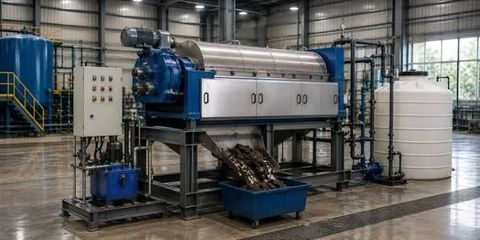
Industrial sludge dewatering equipment includes mechanical machines that apply pressure, centrifugal force, or filtration to separate water from solids. The choice of equipment depends on sludge characteristics, processing capacity, available space, and the intended disposal or reuse method.
Common Sludge Dewatering Processes
Several technologies are used in industrial sludge treatment:
- Screw press dewatering: A sludge dewatering screw press moves sludge through a gradually narrowing chamber, applying pressure to separate water.
- Belt filter press: Industrial belt filter press systems pass sludge between moving filter belts, using pressure and gravity to remove moisture.
- Centrifugal dewatering: Industrial centrifuge dewatering systems use rotational force to separate solid particles from liquid.
- Filter press treatment: An industrial filter press for sludge applies pressure to sludge held within filter chambers, producing solid filter cakes.
- Thermal drying: Industrial sludge drying equipment uses heat to remove additional moisture after mechanical dewatering.
Each process has different operating requirements and produces different levels of moisture reduction.
Importance
Sludge dewatering matters because wastewater treatment generates large quantities of wet residual material. Reducing its water content can simplify storage, transportation, and subsequent treatment. It also helps wastewater facilities manage sludge within available space and operational limits.
Industrial facilities, municipal treatment plants, food processing units, and chemical manufacturing operations all generate sludge that requires appropriate handling. Wastewater sludge treatment systems help separate solids from treated water and prepare residual materials for further management.
Reducing Sludge Volume
Wet sludge contains water that contributes significantly to its total volume. Mechanical dewatering removes a portion of this water, resulting in a more concentrated solid material.
This process can reduce the amount of material requiring transportation or additional processing. However, the actual reduction depends on sludge composition, equipment design, and operating conditions.
Supporting Environmental Management
Industrial wastewater management equipment helps facilities manage residual materials and wastewater streams. Proper sludge treatment can reduce handling difficulties and support compliance with applicable environmental requirements.
Chemical sludge treatment systems may also be used when wastewater contains metals, suspended chemicals, or other substances that require specialized handling. The resulting sludge must be assessed according to its composition before disposal, reuse, or further treatment.
Improving Treatment Operations
Sludge thickening and dewatering systems are often used together. Thickening increases the concentration of solids before dewatering, which can reduce the volume of material entering downstream equipment.
Automatic sludge dewatering machines can regulate certain operating steps, such as feeding, pressure adjustment, and discharge. Automation can support consistent operation, although equipment still requires inspection, maintenance, and appropriate process monitoring.
Recent Updates
Developments in sludge treatment during 2024–2026 reflect broader interest in energy efficiency, process monitoring, equipment automation, and resource recovery. Wastewater facilities are increasingly examining how dewatering systems fit into wider treatment and environmental management processes.
Automation and Digital Monitoring
Modern industrial sludge dewatering systems may include sensors, programmable controls, and monitoring interfaces. These features can help operators track feed rates, pressure, motor activity, and equipment performance.
Digital monitoring can also help identify changes in sludge characteristics or operating conditions. However, sensor accuracy, system integration, and regular calibration remain important considerations.
Energy and Resource Efficiency
Equipment development increasingly focuses on managing energy use and improving water separation. Mechanical technologies such as screw presses and centrifuges continue to serve different treatment requirements, while thermal drying is generally considered when additional moisture removal is necessary.
Some wastewater facilities are also examining ways to recover energy or useful materials from sludge. These approaches depend on sludge composition, local regulations, treatment infrastructure, and the feasibility of further processing.
Integrated Treatment Plant Design
High-capacity sludge dewatering plants may combine screening, thickening, chemical conditioning, mechanical dewatering, and sludge storage. Turnkey sludge treatment plant solutions can involve several connected stages designed around a facility's wastewater characteristics and operating requirements.
Custom sludge dewatering system design increasingly considers the relationship between upstream treatment and downstream sludge handling. Industrial sludge processing plant engineering may also account for equipment layout, control systems, maintenance access, and environmental safeguards.
| Equipment Type | Main Separation Method | Common Application |
|---|---|---|
| Screw press | Mechanical pressure | Continuous sludge dewatering |
| Belt filter press | Gravity and belt pressure | Municipal and industrial sludge |
| Centrifuge | Rotational force | High-throughput sludge processing |
| Filter press | Pressure filtration | Sludge requiring concentrated filter cakes |
| Thermal dryer | Heat evaporation | Additional moisture removal |
Tools and Resources
Selecting and operating dewatering equipment involves understanding sludge properties, treatment objectives, and facility requirements. Technical resources can help operators and planners compare processes and evaluate system performance.
Sludge Analysis and Process Calculations
Sludge testing provides information about solids concentration, moisture content, and other relevant characteristics. These measurements help determine the treatment requirements and identify suitable equipment configurations.
Common calculations include:
- Solids concentration: Measures the proportion of dry solids in a sludge sample.
- Moisture content: Indicates the proportion of water in the material.
- Dewatering efficiency: Evaluates changes in solids concentration or moisture content during treatment.
- Throughput: Measures the amount of sludge processed over a defined period.
Equipment Documentation and Technical Resources
Manufacturer manuals, engineering specifications, and wastewater treatment guidance documents explain how equipment operates and what conditions affect performance. Environmental agencies and technical organizations also publish information about sludge handling, treatment processes, and regulatory considerations.
Process diagrams and equipment comparison tables can help explain the differences between wastewater treatment dewatering equipment options. Pilot testing and laboratory analysis may provide additional information when sludge behavior is difficult to predict.
FAQs
What is industrial sludge dewatering?
Industrial sludge dewatering is a process that removes water from sludge generated by industrial or wastewater treatment operations. It reduces sludge volume and prepares the material for further handling, processing, or disposal.
Which industrial sludge dewatering equipment is commonly used?
Common equipment includes screw presses, belt filter presses, centrifuges, and filter presses. Selection depends on sludge properties, processing capacity, available space, and the required level of moisture removal.
How does a sludge dewatering screw press work?
A sludge dewatering screw press moves sludge through a perforated or screened chamber using a rotating screw. As the material advances, mechanical pressure separates water through the screen while concentrated solids move toward the discharge.
What is the difference between sludge thickening and dewatering?
Sludge thickening increases the concentration of solids by removing some of the water, usually before further treatment. Dewatering removes additional water to produce a more concentrated material that is easier to handle.
Where is industrial sludge drying equipment used?
Industrial sludge drying equipment is used when mechanical dewatering alone does not achieve the required moisture level. Thermal drying may be applied before certain disposal, recovery, or further processing operations, depending on the material and facility requirements.
Conclusion
Industrial sludge dewatering is an important part of wastewater management because it reduces the water content and volume of residual sludge. Technologies such as screw presses, belt filter presses, centrifuges, and filter presses use different methods to separate water from solids. Recent developments emphasize automation, process monitoring, energy considerations, and integrated treatment plant design. Understanding sludge characteristics and equipment functions provides a foundation for evaluating the role of dewatering in industrial and municipal wastewater treatment.

Related Post...
Industrial Sludge Dewatering: A Complete Guide to Processes and Applications
Updated: October 03, 2026
Read More
Warehouse Automation Systems: An Overview of Smart Material Handling
Updated: September 29, 2026
Read More
Workpiece Carrier System: An Overview of Industrial Handling Methods
Updated: September 30, 2026
Read More