Industrial Spinning Machines: Key Features for Reliable Yarn Production
Yarn production involves transforming prepared textile fibers into continuous strands with controlled thickness, twist, and strength.
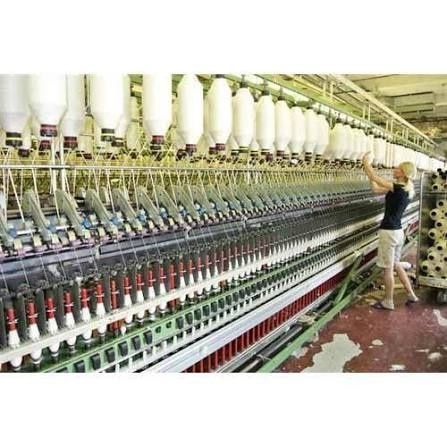
Industrial spinning machines perform the mechanical operations required to draft, twist, and wind fibers into yarn for subsequent textile manufacturing.
Modern spinning machinery can incorporate drafting systems, spindles or rotors, sensors, electronic controls, winding units, and automated material handling. The exact machine configuration depends on the fiber type, yarn specifications, production method, and required production volume.
Why Industrial Spinning Machines Matter
Yarn characteristics depend on how fibers are prepared, aligned, drafted, twisted, and wound. Consistent control throughout these stages helps maintain the specified yarn structure.
Industrial spinning equipment can support:
- Controlled fiber drafting
- Consistent yarn formation
- Twist control
- Continuous yarn production
- Automated winding
- Process monitoring
- Reduced manual handling
- Digital machine control
Different spinning technologies are designed for different fiber types and yarn requirements.
How Industrial Spinning Machines Work
Although spinning systems vary, most follow a sequence in which fibers are progressively prepared, attenuated, twisted, and formed into a package.
1. Fiber Preparation
Before spinning, textile fibers undergo preparation processes that may include opening, cleaning, blending, and carding.
The objective is to create a suitable fiber mass with controlled orientation and cleanliness.
Depending on the production system, prepared material may be delivered as sliver, roving, or another intermediate form.
2. Fiber Feeding
The prepared material enters the spinning machine through a controlled feeding mechanism.
Feed systems maintain a consistent supply of material to the drafting or spinning section. Stable feeding is important because fluctuations can affect yarn uniformity.
3. Drafting
Drafting reduces the thickness of the incoming fiber strand by drawing fibers through sets of rollers operating at different speeds.
The drafting system typically contains:
- Back rollers
- Middle rollers
- Front rollers
- Aprons or guides
- Pressure systems
- Electronic controls
The difference in roller speeds gradually attenuates the fiber strand.
4. Fiber Alignment
During drafting, fibers become more aligned in the direction of yarn formation.
Fiber alignment influences yarn structure and can affect characteristics such as strength, uniformity, and appearance.
5. Twisting
Twisting binds the fibers together and creates the yarn structure.
Different spinning technologies use different mechanisms to introduce twist.
In ring spinning, a spindle and traveler system creates twist as the yarn is formed. Rotor spinning uses a rotating rotor to collect and twist fibers into yarn.
6. Yarn Formation
After drafting and twisting, the fibers form a continuous yarn strand.
The machine controls yarn movement and tension while the yarn travels toward the winding section.
7. Winding
The finished yarn is wound onto a package such as a cone or bobbin.
Modern winding systems can monitor yarn characteristics and remove selected defects before creating the final package.
8. Yarn Monitoring
Sensors can monitor yarn tension, breaks, thickness variations, and other process conditions.
If an abnormal condition is detected, the control system can alert the operator or initiate an automated response, depending on machine configuration.
Main Types of Industrial Spinning Machines
Different spinning technologies produce yarn through different mechanisms.
| Machine Type | Main Spinning Principle | Typical Characteristics |
|---|---|---|
| Ring spinning machine | Spindle and traveler | Fine and versatile yarn production |
| Open-end rotor machine | Rotating rotor | High-speed yarn formation |
| Air-jet spinning machine | Air vortex | High-speed fiber integration |
| Compact spinning machine | Controlled fiber condensation | Reduced fiber-hairiness characteristics |
| Roving frame | Fiber attenuation and twisting | Intermediate preparation |
| Winding machine | Yarn package formation | Final yarn winding |
The appropriate system depends on fiber characteristics, yarn count, production requirements, and desired yarn properties.
Key Features of Industrial Spinning Machines
Precision Drafting Systems
Drafting systems control fiber attenuation using multiple roller arrangements. Accurate roller speeds and pressure settings contribute to consistent yarn formation.
Spindle Systems
Ring spinning machines use spindles to rotate the yarn package and create twist.
Spindle speed, balance, vibration, and lubrication are important operating considerations.
Rotor Systems
Open-end spinning machines use high-speed rotors to collect fibers and form yarn.
Rotor design and operating speed influence the spinning process and yarn characteristics.
Electronic Controls
Modern spinning machines can use electronic systems to control drafting, spindle or rotor operation, yarn monitoring, winding, and machine settings.
Automatic Piecing
Some spinning machines can automatically reconnect yarn after a break. This reduces the amount of manual intervention required during continuous production.
Yarn Sensors
Sensors can detect yarn breaks and variations in yarn characteristics. Monitoring systems can provide information about machine operation and production conditions.
Automatic Doffing
Doffing systems remove completed yarn packages and replace them with empty packages.
Automation can reduce manual handling during package changes.
Factors Affecting Spinning Machine Performance
Fiber Type
Cotton, polyester, viscose, wool, and blended fibers have different processing characteristics.
Fiber length, fineness, strength, moisture, and surface properties can influence machine settings.
Yarn Count
Yarn count describes the fineness or thickness of the yarn according to the selected measurement system. Different yarn counts require appropriate drafting and spinning conditions.
Twist Level
Twist affects how fibers bind together and influences yarn characteristics.
The required twist depends on fiber type, yarn construction, and intended application.
Spindle or Rotor Speed
Higher operating speeds can increase production rates but also require suitable machine settings, fiber preparation, and component condition.
Drafting Ratio
The drafting ratio determines how much the incoming fiber strand is attenuated.
Incorrect drafting conditions can contribute to yarn irregularity.
Humidity
Textile fibers respond to moisture conditions. Environmental humidity can affect fiber behavior, static electricity, yarn formation, and machine operation.
Industrial Spinning Machines vs. Traditional Spinning
| Feature | Traditional Spinning | Industrial Spinning |
|---|---|---|
| Production scale | Smaller | Large-scale |
| Fiber handling | Manual or semi-manual | Mechanized |
| Drafting | Mechanical/manual control | Precision roller systems |
| Twist control | Operator dependent | Machine controlled |
| Monitoring | Limited | Sensor-based |
| Winding | Manual or semi-automatic | Automated options |
| Data collection | Limited | Digital systems |
Industrial spinning systems are designed for continuous and controlled textile production.
Automation in Industrial Spinning
Automation has become an important part of modern spinning machinery.
Automated Material Handling
Conveyors, transport systems, and package-handling equipment can move material between different processing stages.
Automatic Piecing
Automated piecing systems reconnect broken yarn ends and return the spinning position to normal operation.
Automatic Doffing
Doffing systems remove completed packages and prepare the machine for the next production cycle.
Process Monitoring
Sensors and software can collect information about spindle speed, yarn breaks, machine status, and production conditions.
Centralized Controls
Central control systems allow operators to monitor multiple machine settings from a digital interface.
Applications of Industrial Spinning Machines
Industrial spinning machinery is used to produce yarn for:
- Apparel textiles
- Home textiles
- Technical textiles
- Knitted fabrics
- Woven fabrics
- Industrial fabrics
- Upholstery
- Bedding products
- Textile blends
Different yarn structures and spinning technologies are selected according to the requirements of the final textile product.
Maintenance Considerations
Regular maintenance helps keep spinning machinery within its intended operating conditions.
Important areas include:
- Spindles
- Rotors
- Drafting rollers
- Bearings
- Belts
- Travelers
- Yarn guides
- Sensors
- Pneumatic systems
- Lubrication systems
- Electronic controls
Dust and fiber accumulation should be managed according to machine instructions. Worn components should be inspected and replaced according to manufacturer recommendations and operating conditions.
Safety Considerations
Industrial spinning machinery contains high-speed rotating components and numerous moving parts.
Important safety practices include:
- Keeping guards correctly installed
- Using emergency-stop systems
- Following machine operating procedures
- Keeping loose clothing away from moving components
- Performing maintenance in a safe machine state
- Using appropriate protective equipment
- Maintaining clean working areas
- Following applicable workplace requirements
Specific safety procedures depend on the machine design and production environment.
Who Uses Industrial Spinning Machines?
Industrial spinning machines are used by textile mills, yarn manufacturers, fiber-processing facilities, and integrated textile production plants.
Operators monitor machine settings and material flow, while maintenance teams inspect mechanical, electrical, pneumatic, and electronic components. Quality teams may also monitor yarn characteristics against production specifications.
Frequently Asked Questions
What are industrial spinning machines?
Industrial spinning machines are textile-production systems that transform prepared fibers into continuous yarn through processes such as drafting, twisting, spinning, and winding.
What are the main types of industrial spinning machines?
Common types include ring spinning machines, open-end rotor spinning machines, air-jet spinning machines, compact spinning machines, roving frames, and winding machines.
How does a ring spinning machine work?
A ring spinning machine drafts the fiber strand and introduces twist through the coordinated movement of the spindle and traveler. The resulting yarn is wound onto a bobbin.
What is rotor spinning?
Rotor spinning is a yarn-production method in which fibers are separated and collected inside a rapidly rotating rotor. The fibers are then formed into a continuous yarn strand.
How should industrial spinning machines be maintained?
Maintenance generally includes inspecting drafting systems, spindles or rotors, bearings, belts, yarn guides, sensors, pneumatic systems, lubrication points, and electronic controls according to manufacturer instructions.
Conclusion
Industrial spinning machines provide controlled mechanical processes for converting prepared textile fibers into yarn. Drafting systems regulate fiber attenuation, spinning mechanisms introduce twist, and winding systems create packages for subsequent textile production.
Key features include precision drafting, spindle or rotor systems, electronic controls, yarn sensors, automatic piecing, automatic doffing, and process-monitoring technology. Machine selection depends on fiber type, yarn count, twist requirements, production volume, and the desired yarn characteristics.
Understanding these features helps explain how modern spinning machinery coordinates fiber handling, yarn formation, monitoring, and package preparation within an industrial textile production environment.

Related Post...
Gear Grinding Machines: An Overview of Precision Gear Manufacturing
Updated: September 19, 2026
Read More
Spray Coating Machines: An Overview of Modern Coating Technology
Updated: September 19, 2026
Read More