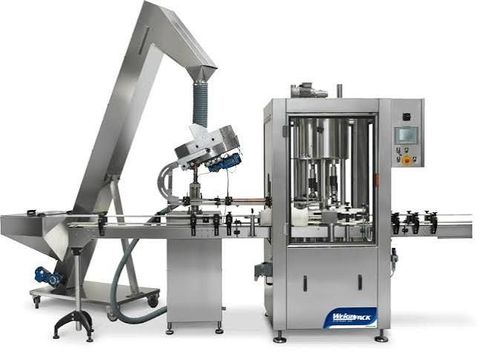
Container Capping Systems: An Overview of Modern Capping Technology
Container capping systems are equipment and control arrangements used to place and secure closures on containers after filling.
They are used across industries where bottles, jars, vials, cans, and other containers need a consistent closure. A container capping machine may perform one or several steps, such as positioning a cap, applying downward pressure, tightening a threaded closure, or checking whether the closure is correctly placed.
The development of capping technology is closely connected with the growth of packaged products and automated production. Earlier packaging operations often depended on manual handling, while mechanical systems later introduced controlled movement and repeatable capping processes. Modern container capping equipment can combine mechanical components, sensors, electronic controls, and conveyor systems.
An automatic container capping machine can receive containers through a conveyor, position them beneath a capping mechanism, place closures, and apply a defined closing action. Depending on the container and closure design, different methods may be used, including screw capping, snap capping, press capping, crimp capping, and other specialized techniques.
How Capping Systems Work
A typical capping line has several connected stages. Containers are transported toward the capping area, closures are supplied and positioned, and the capping mechanism applies the required movement or pressure. Sensors and control systems can monitor container presence, cap position, and other operating conditions.
Industrial container capping systems may be integrated with filling, labeling, inspection, and packaging equipment. A container filling and capping machine can combine filling and closure operations within a coordinated production sequence.
Main Types of Capping Equipment
Different containers require different closure methods. The choice depends on the container material, closure design, dimensions, product characteristics, and required production process.
| Capping Type | Common Closure | General Operation |
|---|---|---|
| Screw capping | Threaded caps | Cap is rotated onto the container |
| Snap capping | Snap-fit closures | Closure is pressed into position |
| Press capping | Press-on caps | Controlled downward force secures the cap |
| Crimp capping | Crimp-style closures | Closure is formed around the container opening |
| ROPP capping | Aluminum threaded closures | Closure is shaped and tightened around the neck |
These systems can range from manually assisted equipment to fully integrated automated packaging capping systems.
Importance
Container capping plays an important role in packaging because the closure forms part of the container's overall protection. A properly positioned closure can help keep the contents contained and can support the intended packaging configuration.
Capping technology affects manufacturers, packaging workers, quality teams, and consumers. Inconsistent closure application can result in loose caps, damaged closures, container deformation, or interruptions in production. Automated systems are designed to make the physical capping process more controlled and repeatable.
Supporting Consistent Closure Application
Precision container capping equipment uses controlled mechanical movement to apply closures according to defined operating parameters. Depending on the design, controls may regulate torque, pressure, speed, height, or other variables.
High precision container capping systems are particularly relevant when closure dimensions and application requirements must remain within defined ranges. Monitoring these parameters can help identify process variation before it affects a larger group of containers.
Integration With Filling Operations
Packaging lines often contain several connected operations. Automatic container filling and capping systems can coordinate filling and closure activities, reducing the need to move containers between separate stages.
Container sealing and capping systems may also incorporate inspection steps. Sensors or cameras can identify missing, incorrectly positioned, or visibly damaged closures, depending on the capabilities of the equipment.
Applications Across Industries
Capping equipment is used in many packaging environments. Food and beverage containers may use threaded or snap-fit closures, while personal-care products can use pumps, caps, or specialized closures.
Pharmaceutical container capping systems have additional process considerations because packaging operations may be subject to specific quality, cleanliness, and documentation requirements. Pharmaceutical capping equipment can include controlled closure application and inspection functions appropriate to the container and packaging process.
Recent Updates
From 2024 through 2026, container capping technology has continued moving toward greater automation, data collection, equipment integration, and digital monitoring. The general trend is toward packaging lines where individual machines communicate with other stages of the production process.
Increased Automation and Monitoring
Automated container capping equipment increasingly incorporates sensors and programmable controls. These systems can monitor factors such as container presence, closure position, machine speed, and selected capping parameters.
Industrial automated container capping systems can connect capping equipment with upstream filling and downstream inspection or labeling processes. This creates a more coordinated workflow while also increasing the importance of reliable communication between individual machines.
Greater Use of Digital Controls
Advanced container capping machinery can use touchscreen interfaces and programmable settings. Operators can use these interfaces to adjust approved process parameters, review machine status, and identify certain operating faults.
Data collection is also becoming more common in automated packaging environments. Recorded operating information can help production teams understand process variation and identify recurring equipment conditions.
AI and Vision-Based Inspection
Vision systems are increasingly used alongside packaging equipment to inspect containers and closures. Camera-based systems can evaluate characteristics such as cap presence, position, orientation, and visible defects when configured for those purposes.
AI-supported inspection can assist with recognizing patterns in images, but its performance depends on system configuration, training data, lighting, product variation, and validation. Automated pharmaceutical capping systems may therefore combine automated inspection with established quality-control procedures.
Tools and Resources
Several tools and resources can help users understand, design, monitor, or maintain capping operations. The appropriate resource depends on whether the focus is equipment selection, process documentation, quality control, or production analysis.
Process Documentation Tools
Packaging teams can use process maps and checklists to document the movement of containers through a production line. Useful documents may include:
- Container and closure specifications.
- Capping process flow diagrams.
- Equipment setup checklists.
- Inspection criteria.
- Maintenance schedules.
- Production monitoring records.
These resources can make the relationship between filling, capping, inspection, and packaging easier to understand.
Measurement and Testing Tools
Torque measurement devices can be used to evaluate threaded closure application. Force gauges may be relevant to certain press-fit or snap-fit closure processes. Dimensional measurement tools can also help verify container necks and closure components against specified dimensions.
Equipment manuals and technical documentation provide information about operating limits, adjustment procedures, replacement components, and machine controls. Packaging standards and applicable regulatory guidance can provide additional context for specific industries.
Automation and Control Resources
Programmable logic controllers, human-machine interfaces, sensors, and machine-vision equipment are commonly associated with automated capping lines. These components can coordinate machine movements and provide information about operating conditions.
For pharmaceutical and other regulated packaging environments, organizations may also use documented validation procedures, electronic records, and quality-management processes appropriate to their requirements.
FAQs
What are container capping systems?
Container capping systems are machines or integrated equipment used to position and secure closures on containers. They can range from mechanically assisted systems to fully automated packaging lines.
How does an automatic container capping machine work?
An automatic container capping machine generally receives containers through a conveyor, positions closures, and applies a controlled movement such as rotation or downward pressure. Sensors and controls can coordinate the sequence and detect selected process conditions.
What is the difference between container capping equipment and sealing equipment?
Capping equipment generally applies a physical closure to a container. Sealing equipment may create or support a seal between the container and its closure, such as through induction sealing or another sealing method. Some container sealing and capping systems combine both operations.
Where are pharmaceutical container capping systems used?
Pharmaceutical container capping systems are used in packaging processes involving containers such as bottles, vials, and other packaging formats. Their design depends on the closure type, container specifications, cleanliness requirements, and applicable quality procedures.
What are high speed container capping machines?
High speed container capping machines are automated systems designed to process containers at relatively rapid production rates. Their actual operating speed depends on container dimensions, closure type, machine configuration, and the wider packaging line.
Conclusion
Container capping systems have developed from mechanically assisted equipment into integrated systems that can coordinate closure application, monitoring, inspection, and packaging operations. Container capping machine designs vary according to container shape, closure type, production requirements, and industry conditions. Recent developments have emphasized automation, digital controls, connected equipment, and machine-vision inspection. Pharmaceutical and industrial applications may require additional controls and documented procedures based on their specific operating environments.

Related Post...
Conveyor Sorting Systems: An Overview of Modern Material Handling
Updated: September 16, 2026
Read More
Industrial Food Evaporator: An Overview of Modern Food Processing Systems
Updated: September 16, 2026
Read More
Multi Nozzle Filling Systems: An Overview of Modern Filling Technology
Updated: September 16, 2026
Read More