Barrel Finishing Machines: An Overview of Their Uses and Applications
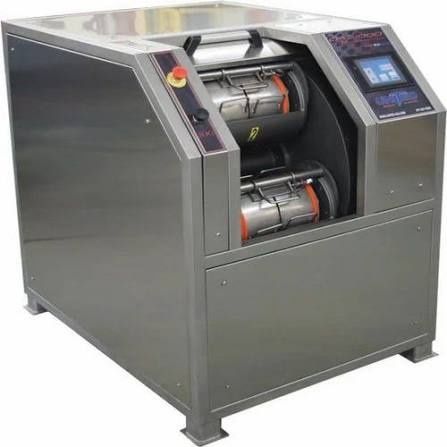
Barrel finishing machines are equipment used to clean, deburr, polish, smooth, and improve the surface of multiple workpieces at the same time.
Barrel finishing machines generally place parts inside a rotating or vibrating container along with abrasive media, water, and compounds selected for the required finishing process. The movement creates controlled contact between the parts and media.
The basic idea behind barrel finishing has existed for many years and developed from simple tumbling methods into specialized industrial equipment. Modern barrel finishing equipment can be configured for different materials, component sizes, surface conditions, and production requirements.
Industrial barrel finishing equipment is commonly used for metal components, cast parts, stamped pieces, machined components, fasteners, and other manufactured items. Depending on the machine design, the process may remove sharp edges, clean residues, reduce surface roughness, or create a more uniform appearance.
How Barrel Finishing Works
A typical barrel finishing machine has a chamber or barrel that holds the workpieces and finishing media. The barrel rotates or moves according to the machine design, causing the components and media to move against one another.
The finishing media may consist of ceramic shapes, plastic pieces, steel media, or other materials. Compounds can also be added to support cleaning, polishing, or other surface-treatment processes.
The outcome depends on several factors, including:
- Type and hardness of the workpiece.
- Shape and size of the component.
- Type and size of finishing media.
- Rotation or vibration conditions.
- Processing duration.
- Use of water or finishing compounds.
Importance
Surface finishing is an important part of manufacturing because components may have sharp edges, machining marks, casting residues, oxidation, or other unwanted surface characteristics after production. Barrel finishing equipment provides a method for treating many components together rather than handling every piece individually.
Industrial metal finishing equipment is used across several sectors, including automotive manufacturing, hardware production, aerospace components, electrical products, medical equipment manufacturing, and general metalworking. The appropriate finishing method depends on the material and the desired surface condition.
Deburring and Edge Treatment
Industrial deburring machines are used to reduce unwanted sharp edges created during cutting, drilling, stamping, casting, and machining. Vibratory deburring equipment can perform this type of treatment by moving parts and abrasive media together.
Deburring can be particularly useful for components that contain many edges or irregular surfaces. The process needs to be controlled because excessive treatment may alter dimensions, edges, or surface characteristics.
Cleaning and Polishing
A barrel polishing machine can be used when the objective includes cleaning or improving the visual uniformity of a component. The process may remove dirt, residues, light oxidation, or minor surface irregularities depending on the media and compounds used.
Metal polishing and finishing equipment can also be used before subsequent manufacturing or surface-treatment stages. Proper preparation can help create a more consistent surface condition.
Types of Barrel and Mass Finishing Equipment
Several machine configurations are used for mass finishing. Their differences mainly relate to movement, capacity, workpiece geometry, and the type of surface treatment required.
| Equipment Type | Typical Movement | Common Applications |
|---|---|---|
| Rotary barrel machine | Rotating barrel | Deburring, cleaning, general finishing |
| Vibratory finishing equipment | Controlled vibration | Deburring, smoothing, polishing |
| Centrifugal barrel machine | Rotational centrifugal action | More intensive finishing of suitable components |
| Automated barrel system | Mechanized loading and processing | Repetitive production workflows |
| Precision finishing machine | Controlled finishing conditions | Components requiring specific surface characteristics |
Industrial vibratory finishing machines are particularly useful when multiple components need simultaneous treatment. Their operating conditions can be adjusted according to part geometry, media selection, and finishing requirements.
Recent Updates
From 2024 through 2026, the general direction of barrel finishing technology has included greater automation, improved process monitoring, and more controlled handling of components. These developments reflect broader manufacturing efforts to reduce unnecessary manual handling and improve consistency between production batches.
Automation and Process Monitoring
Automatic barrel finishing systems can integrate loading, processing, separation, rinsing, drying, and material movement into a coordinated workflow. Automated mass finishing systems may use sensors, timers, programmable controls, and material-handling equipment to coordinate repeated processing stages.
Automation does not eliminate the need for process knowledge. Operators still need to select appropriate media, compounds, loading conditions, and processing parameters for the components being treated.
Greater Process Control
Modern industrial vibratory finishing systems increasingly emphasize repeatable operating conditions. Monitoring variables such as processing duration, machine movement, water flow, and compound concentration can help document how a finishing cycle is performed.
Advanced barrel finishing equipment may also be integrated with broader manufacturing data systems. Such integration can make it easier to record production information and identify changes between processing cycles.
Energy, Water, and Media Considerations
Manufacturers are also paying greater attention to resource use during mass finishing. Equipment designs and process methods can focus on efficient water management, media separation, compound control, and material recovery.
These developments vary between machine types and applications. Environmental performance depends not only on the equipment but also on the selected process, materials, maintenance practices, and waste-management methods.
Tools and Resources
Understanding barrel finishing often requires more than identifying a machine type. Information about workpiece material, surface requirements, media, and process conditions is useful when studying the technology.
Process Planning Resources
Technical data sheets and machine manuals can explain chamber dimensions, operating ranges, loading requirements, media compatibility, and maintenance procedures. Process worksheets can also help record variables such as batch quantity, media type, processing duration, and compound concentration.
Useful planning resources include:
- Workpiece material specifications.
- Abrasive-media selection charts.
- Surface-finish measurement references.
- Equipment operating manuals.
- Process parameter worksheets.
- Safety and maintenance checklists.
Measuring Surface Results
Surface roughness instruments can measure characteristics of a finished surface using established measurement methods. Visual inspection may also be used for appearance-related requirements, while dimensional instruments can check whether processing has affected critical component measurements.
For precision metal finishing machines, measurement methods should correspond to the requirements of the component. A visually smooth surface does not necessarily indicate a specific measured roughness value.
Complete Industrial Systems
Complete industrial barrel finishing systems may combine finishing chambers with separation equipment, rinsing units, dryers, conveyors, dosing equipment, and control systems. The configuration depends on production volume, component characteristics, and the sequence of processing steps.
Automated metal finishing systems can therefore range from a single controlled machine to a connected production line containing several stages.
FAQs
What are barrel finishing machines used for?
Barrel finishing machines are commonly used for deburring, cleaning, smoothing, polishing, and surface conditioning of multiple components. The exact result depends on the machine, media, workpiece material, and process settings.
How does industrial barrel finishing equipment work?
Industrial barrel finishing equipment places workpieces and finishing media inside a chamber. Rotation or vibration causes controlled contact between them, producing mechanical action on the component surfaces.
What is the difference between barrel finishing and vibratory finishing equipment?
Rotary barrel finishing generally uses a rotating container to move parts and media. Vibratory finishing equipment uses controlled vibration to create movement, and the two methods can produce different results depending on the component and process conditions.
What is a centrifugal barrel finishing machine?
A centrifugal barrel finishing machine uses centrifugal motion to create more intensive interaction between the workpieces and finishing media. It can be used for suitable components that require a particular level of surface treatment.
What factors affect barrel finishing results?
Important factors include workpiece material, component geometry, media type and size, loading conditions, processing duration, machine movement, water, and compounds. Changes to these variables can affect the resulting surface condition.
Conclusion
Barrel finishing machines use controlled mechanical movement to deburr, clean, smooth, and polish groups of components. Industrial barrel finishing equipment includes rotary, vibratory, centrifugal, and automated configurations for different manufacturing requirements. Recent developments have placed greater emphasis on automation, process monitoring, resource management, and integration with manufacturing workflows. The resulting surface characteristics depend on the equipment, workpiece, finishing media, and process conditions.

Related Post...
Barrel Finishing Machines: An Overview of Their Uses and Applications
Updated: September 12, 2026
Read More
Industrial Food Evaporator: An Overview of Modern Food Processing Systems
Updated: September 11, 2026
Read More
Die Sorters Guide to Types, Features, and Semiconductor Applications
Updated: September 11, 2026
Read More