Air Jet Loom: An Overview of Modern High-Speed Weaving Technology
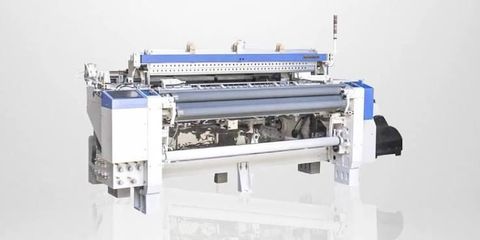
An air jet loom is a weaving machine that uses compressed air to insert weft yarn across the width of a fabric.
Unlike traditional shuttle looms, which carry the weft mechanically through the shed, an air jet weaving machine uses controlled streams of air to move the yarn from one side to the other. This principle allows weaving equipment to operate at high speeds while handling a range of commonly used textile yarns.
The development of the air jet loom is connected with the broader shift from mechanical textile equipment toward electronically controlled machinery. Modern air jet loom machines combine mechanical components with sensors, electronic controls, pneumatic systems, and computerized monitoring. These elements coordinate yarn insertion, shedding, beat-up, fabric take-up, and other weaving operations.
An industrial air jet loom generally consists of several important systems. The main drive mechanism provides movement, while the shedding system separates warp yarns to create the opening through which the weft passes. Air nozzles guide the weft, and the reed positions the inserted yarn within the developing fabric.
How Air Jet Weaving Works
The basic process begins when a weft yarn is prepared for insertion. A main nozzle releases compressed air to move the yarn into the shed, while relay nozzles positioned along the weaving width can help maintain the yarn's movement.
After the weft reaches the opposite side, the reed pushes it into the fabric structure. The process then repeats with the next insertion. Timing between these movements is important because the different mechanisms must operate in coordination.
A high speed air jet loom may include electronic controls that allow operators to adjust weaving parameters. Depending on the machine design, these can include air pressure, nozzle timing, yarn tension, loom speed, fabric width, and other operating settings.
Main Applications
Air jet weaving is commonly associated with fabrics that can be produced effectively through pneumatic weft insertion. Applications can include clothing fabrics, household textiles, industrial fabrics, and other woven materials.
The suitability of a textile air jet loom depends on factors such as yarn characteristics, fabric structure, width, density, and required production conditions. An automatic textile weaving machine may also include monitoring functions that help detect certain interruptions during operation.
Importance
Air jet weaving technology matters because woven fabrics are used in many everyday products, from apparel and household materials to technical and industrial textiles. The weaving stage has a direct role in forming the structure and characteristics of these fabrics.
For textile manufacturers, an air jet loom can automate many repeated movements that would otherwise require mechanical handling. Automation can also allow production information and machine conditions to be monitored through electronic control systems.
Supporting High-Speed Textile Production
A high speed textile weaving machine is designed around rapid and coordinated yarn insertion. Because compressed air performs the main weft transportation function, the loom does not need a conventional shuttle moving back and forth across the fabric width.
This design can support high-speed production, although actual operating speed varies according to fabric construction, yarn properties, machine configuration, and operating conditions. A high performance air jet loom therefore needs to be matched with the specific characteristics of the fabric being produced.
Improving Process Control
Computerized air jet loom systems can provide operators with information about machine settings and production conditions. Sensors may detect events such as yarn breaks, abnormal machine conditions, or other interruptions.
Automated monitoring can help operators identify process changes more quickly. However, electronic controls do not eliminate the need for appropriate setup, inspection, cleaning, adjustment, and routine maintenance.
Factors That Affect Loom Selection
Different weaving applications require different machine characteristics. Important factors can include:
- Fabric width and required weaving pattern.
- Type and characteristics of warp and weft yarn.
- Required fabric density.
- Expected operating speed.
- Available compressed-air capacity.
- Electronic control and monitoring functions.
- Compatibility with existing textile weaving equipment.
The air jet weaving machine price can vary significantly because machine configuration, width, features, automation level, auxiliary equipment, and production requirements differ between applications. A price figure therefore has limited meaning without information about the complete machine configuration.
| Factor | Typical Consideration |
|---|---|
| Weft insertion | Compressed-air system |
| Warp control | Shedding mechanism |
| Fabric formation | Reed and beat-up system |
| Monitoring | Sensors and electronic controls |
| Production width | Depends on machine configuration |
| Automation | Varies by model and application |
| Air requirement | Depends on nozzle and operating settings |
Recent Updates
Between 2024 and 2026, air jet weaving technology has continued moving toward greater automation, digital monitoring, energy management, and integration with wider textile production systems. Industry exhibitions during this period have placed considerable attention on intelligent manufacturing, digitalization, sustainability, and automated production processes.
Industry shipment data also shows continued activity in shuttleless weaving. According to figures reported by the International Textile Manufacturers Federation, global shipments of air-jet looms increased in 2024, with Asia and Oceania receiving the large majority of global air-jet loom deliveries.
Energy and Digital Controls
Recent air jet weaving machinery developments have included efforts to reduce compressed-air and electrical energy requirements while maintaining controlled weft insertion. For example, Picanol introduced a next-generation airjet platform in 2025 with an energy-reduction feature and expanded digital tools, illustrating the industry's focus on energy management and connected machine information.
Other manufacturers have also introduced new air-jet platforms and upgrades. Itema presented the Galileo-AX airjet weaving machine at ITMA ASIA + CITME 2025, with the company highlighting energy efficiency and updated machine technology.
Automation and Intelligent Manufacturing
Current developments increasingly connect weaving machines with software, sensors, production data, and broader factory systems. An automated air jet weaving system can collect information about machine operation and production conditions, creating opportunities for more detailed monitoring.
The wider textile machinery sector is also expanding its focus on digital platforms and production automation. ITMA ASIA + CITME 2026 has identified digital platforms, automation solutions, intelligent manufacturing, and sustainable production among its technology areas.
These developments do not mean that every industrial air jet loom uses artificial intelligence or operates without human supervision. The level of automation varies considerably between machines and production facilities.
Tools and Resources
Understanding an air jet loom machine involves more than examining the loom itself. Technical documents, fabric specifications, production calculations, and machine-monitoring tools can help explain how the equipment operates.
Technical Resources
Manufacturer documentation can provide information about machine dimensions, operating parameters, nozzle arrangements, fabric widths, control systems, and compatible accessories. Textile machinery exhibitions such as ITMA ASIA + CITME also provide industry information covering weaving and related equipment. The exhibition's product classifications specifically include air jet weaving machines.
Useful resources can include:
- Loom specification sheets for comparing technical characteristics.
- Fabric construction tables for understanding yarn density and structure.
- Air-consumption calculations for pneumatic equipment planning.
- Production planning spreadsheets for estimating machine utilization.
- Machine manuals for operating and maintenance information.
- Textile testing references for examining fabric properties.
Production and Planning Tools
A complete air jet weaving production line can include more than the loom itself. Depending on the factory layout, upstream yarn preparation, warping, sizing, weaving, inspection, and downstream fabric handling may be connected into a broader production sequence.
Planning software and spreadsheets can help document machine capacity, fabric specifications, shift schedules, material requirements, and production records. These tools are useful for understanding how an individual loom fits into the wider manufacturing process.
Industry Information
Information from textile machinery associations, technical publications, research institutions, and established trade exhibitions can help readers follow developments in air jet weaving machinery. Such resources can also provide explanations of weaving terminology, equipment categories, and changes in textile manufacturing technology.
FAQs
What is an air jet loom?
An air jet loom is a weaving machine that uses compressed air to insert weft yarn through the warp shed. It combines pneumatic yarn insertion with mechanical and electronic systems that form the fabric.
How does an air jet weaving machine work?
An air jet weaving machine uses a main air nozzle and, in many designs, additional relay nozzles to move weft yarn across the fabric width. The reed then pushes the inserted yarn into position as the weaving cycle continues.
What affects air jet weaving machine price?
Air jet weaving machine price depends on factors such as machine width, configuration, automation functions, electronic controls, auxiliary equipment, and application requirements. Prices can therefore vary between different machine configurations.
What is an automatic air jet loom?
An automatic air jet loom uses electronic controls and automated mechanisms to coordinate parts of the weaving process. Depending on its design, it may include automatic monitoring, yarn-break detection, parameter management, and other control functions.
Where are industrial air jet looms used?
Industrial air jet looms are used in textile manufacturing for producing various woven fabrics. Their suitability depends on yarn type, fabric structure, width, density, and other production requirements.
Conclusion
An air jet loom uses controlled compressed air to insert weft yarn and form woven fabric at high operating speeds. Modern machines combine pneumatic systems with electronic controls, sensors, automation, and digital monitoring. Developments from 2024 through 2026 show continued attention to energy management, connected production, automation, and intelligent textile manufacturing. The appropriate machine configuration depends on fabric requirements, yarn characteristics, production conditions, and the wider textile production setup.

Related Post...
Capsule Polishing Machine: An Overview of Modern Polishing Technology
Updated: September 30, 2026
Read More
Industrial Metrology Machines: An Overview of Measurement Technologies
Updated: September 29, 2026
Read More
Concrete Finishing Equipment: An Overview of Modern Finishing Methods
Updated: September 28, 2026
Read More