Flow Cytometers: An Overview of Cell Analysis Technology
Flow cytometry is a laboratory technique used to measure and analyze the physical and chemical characteristics of individual cells or other particles suspended in a liquid.
A flow cytometer uses lasers, optical detectors, and electronic systems to collect information about cells as they pass through a narrow flow channel. This technology is used in medical laboratories, biological research, immunology, and biotechnology.
The development of flow cytometry grew from earlier methods of counting and examining cells. Advances in optics, fluorescence detection, electronics, and computer processing made it possible to examine several characteristics of individual cells during a single measurement. Today, flow cytometry laboratory equipment can help researchers study cell populations, compare samples, and identify differences that may not be visible through conventional microscopy alone.
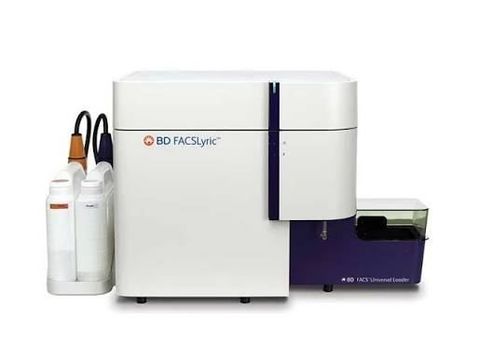
Flow cytometer manufacturers develop instruments with different configurations for research and clinical laboratory environments. These systems vary in their optical arrangements, detection capabilities, sample handling methods, and software. Laboratory flow cytometry systems are generally selected according to the sample types, analytical requirements, and operating procedures of the facility.
How Flow Cytometers Work
A flow cytometer moves a prepared liquid sample through a narrow channel so that cells pass through a measurement area. Lasers illuminate the cells, and detectors measure the resulting scattered light and fluorescence signals.
The information collected can help describe cell size, internal complexity, and the presence of specific markers. Fluorescent dyes or labelled antibodies may be used to identify particular cellular components, depending on the purpose of the analysis.
The process generally involves several stages:
Sample preparation: Cells are collected, prepared, and suspended in a suitable liquid.
Cell movement: Fluidics guide cells through the instrument's measurement area.
Optical detection: Lasers and detectors measure scattered light and fluorescent signals.
Data processing: Software converts the detected signals into measurements that can be examined and compared.
Interpretation: Trained laboratory personnel review the results in the context of the experiment or clinical procedure.
Types of Flow Cytometry Instruments
Different instruments support different laboratory requirements. Benchtop flow cytometers are compact systems designed for laboratory work where space and sample throughput are important considerations. Benchtop flow cytometer suppliers may provide instruments with different laser configurations, detection channels, and automation features.
Clinical flow cytometry analyzers are used in diagnostic laboratory workflows where validated procedures and consistent analytical methods are important. Research flow cytometer equipment, by comparison, may support exploratory experiments involving a wider range of cell types, fluorescent markers, and experimental designs.
Importance
Flow cytometry is important because biological samples often contain several types of cells with different characteristics. Examining a sample as a whole may conceal these differences, while flow cytometry can measure individual cells and help distinguish populations according to selected properties.
The technology supports research into immune responses, cell development, cancer biology, infectious disease, and other areas of biomedical science. Its applications also extend to biotechnology, where researchers may examine cell populations during the development or assessment of biological processes.
Applications in Research and Clinical Laboratories
Cell analysis flow cytometry equipment is used in laboratories to investigate cellular characteristics and population changes. Researchers may use it to study immune cells, evaluate cell viability, measure protein expression, or examine how cells respond to experimental conditions.
Clinical laboratories use flow cytometry as part of selected diagnostic procedures. For example, analysis of immune-cell populations can contribute to the evaluation of certain immune disorders and blood-related conditions. Results must be interpreted alongside other clinical information and relevant laboratory findings.
Understanding Multiple Cell Characteristics
Multiparameter flow cytometry analyzers can measure several characteristics of a cell during the same analysis. Different fluorescent labels can identify selected proteins or other cellular features, allowing researchers to distinguish populations with overlapping physical characteristics.
This approach can provide more detailed information than a measurement based on a single marker. However, increasing the number of parameters also introduces technical challenges, including fluorescence overlap, compensation requirements, panel design, and data interpretation.
Limitations and Practical Considerations
Flow cytometry results depend on sample quality, instrument configuration, reagent selection, and the methods used to interpret the data. Poor sample preparation or damaged cells can affect measurements, while incorrect instrument settings may produce misleading patterns.
Laboratories must also consider instrument calibration, quality-control procedures, operator training, and data management. Automated flow cytometry systems can reduce manual handling in certain stages, but automation does not eliminate the need for oversight and appropriate quality checks.
Recent Updates
From 2024 through 2026, developments in flow cytometry have continued to focus on higher-dimensional analysis, improved automation, data processing, and integration with other laboratory technologies. The direction of development reflects the need to examine complex cell populations while managing increasing volumes of analytical information.
Advances in Multiparameter Analysis
Advanced flow cytometry instruments can support the measurement of numerous cellular markers, depending on their optical design and detector configuration. Improved detector technologies and expanded fluorescent-label options can help laboratories investigate more complex biological questions.
Higher-dimensional analysis also requires careful experimental planning. Researchers need to consider marker selection, fluorescence interference, instrument sensitivity, and analytical methods before interpreting results.
Automation and Digital Data Analysis
Automated flow cytometry systems can incorporate automated sample loading, standardized measurement procedures, and software-assisted data analysis. These functions may reduce repetitive manual steps and help laboratories process multiple samples using defined workflows.
Software tools increasingly support automated gating suggestions, population identification, quality checks, and visualization. These features can assist analysis, but results still depend on the data quality, software settings, and suitability of the analytical method.
Integration with Other Laboratory Technologies
Flow cytometry is increasingly used alongside methods such as cell sorting, microscopy, molecular analysis, and single-cell sequencing. Combining information from different techniques can provide a broader understanding of cellular activity and biological variation.
However, these methods measure different properties and may require separate sample preparation procedures. Their results must be interpreted according to the capabilities and limitations of each technique.
| Development Area | General Purpose | Main Consideration |
|---|---|---|
| Multiparameter detection | Measure several cellular markers | Fluorescence overlap and panel design |
| Automated sample handling | Reduce repetitive manual steps | Sample compatibility and workflow validation |
| Software-assisted analysis | Organize and interpret complex data | Data quality and analytical review |
| Improved optical detection | Measure cellular signals | Instrument configuration and sensitivity |
| Integration with other methods | Combine complementary biological information | Differences in sample preparation and measurement |
Tools and Resources
Several resources help laboratory personnel understand flow cytometry, prepare experiments, evaluate instruments, and interpret analytical results. The appropriate resource depends on whether the work involves research, clinical testing, education, or instrument evaluation.
Instrument Documentation and Technical Resources
Flow cytometry laboratory equipment suppliers and manufacturers commonly publish instrument specifications, operating manuals, application notes, and technical documentation. These materials explain supported sample types, optical configurations, detection channels, software functions, and maintenance requirements.
When comparing instruments, relevant considerations include:
Laser and detector configuration.
Number of measurable parameters.
Sample volume and sample-loading method.
Data analysis and export capabilities.
Quality-control procedures and compatibility with laboratory workflows.
Flow cytometry laboratory equipment suppliers may support different instrument categories, so specifications should be evaluated against the intended application rather than compared by instrument size alone.
Educational and Data Analysis Resources
The International Society for the Advancement of Cytometry (ISAC) provides educational materials and information about cytometry methods and research. The National Center for Biotechnology Information (NCBI) hosts scientific publications and biological research resources that can help readers understand flow cytometry applications.
Flow cytometry analysis software can support tasks such as gating, fluorescence compensation, population comparison, and data visualization. Examples include FlowJo and FCS Express, which are used for analyzing flow cytometry datasets. Users should consult the relevant documentation to understand each platform's supported functions and requirements.
FAQs
What is a flow cytometer used for?
A flow cytometer measures characteristics of individual cells or particles in a liquid sample. It is used in biological research, immune-cell analysis, biotechnology, and selected clinical laboratory procedures.
How do laboratory flow cytometry systems work?
Laboratory flow cytometry systems guide cells through a laser measurement area and detect scattered light and fluorescent signals. Software processes these signals into data that can be examined to identify and compare cell populations.
What should laboratories consider when comparing flow cytometer manufacturers?
Laboratories generally compare instrument configuration, detection capabilities, supported sample types, software, maintenance requirements, and compatibility with established procedures. The intended application determines which features are relevant.
What are multiparameter flow cytometry analyzers?
Multiparameter flow cytometry analyzers measure several cellular characteristics during one analysis. They commonly use different fluorescent markers to distinguish cell populations based on selected proteins or other biological features.
What is the difference between research and clinical flow cytometry analyzers?
Research flow cytometers support experimental investigations and may allow flexible instrument configurations. Clinical flow cytometry analyzers are used within diagnostic workflows that require appropriate validation, quality control, and interpretation under applicable laboratory procedures.
Conclusion
Flow cytometers are analytical instruments that use lasers, optical detection, and data processing to examine individual cells and other particles. They support a range of research and clinical applications, including immune-cell analysis, cellular characterization, and studies of biological processes. Developments in multiparameter detection, automation, and software analysis are expanding the ways laboratories collect and interpret cellular data. Reliable results depend on appropriate sample preparation, instrument configuration, quality control, and careful interpretation.

Related Post...
Vacuum Pads Guide: Types, Materials, and Industrial Applications
Updated: October 19, 2026
Read More
Weight Indicators Guide: Understanding Types, Functions, and Industrial Applications
Updated: October 19, 2026
Read More