Gear Grinding Machines: An Overview of Precision Gear Manufacturing
Gear grinding machines are machine tools used to finish gear teeth after earlier manufacturing stages such as cutting, hobbing, or heat treatment.
The grinding process removes a small amount of material from tooth surfaces to improve dimensional accuracy, surface finish, and the consistency of gear geometry. Gear grinding machines are used in applications where accurate tooth profiles and controlled surface characteristics are important.
The development of gear grinding is closely connected with the growth of precision mechanical systems. As gearboxes became more complex, manufacturers needed methods for producing teeth with controlled profiles, helix angles, spacing, and surface characteristics. Modern gear grinding equipment combines abrasive wheels, computer numerical control (CNC), measurement systems, cooling systems, and automated machine functions.
How Gear Grinding Works
A gear is positioned inside the grinding machine and rotated in coordination with a grinding wheel or grinding tool. The machine controls the relative movement between the workpiece and the abrasive tool so that material is removed from the tooth surfaces according to a defined geometry.
Two common approaches are generating grinding and profile grinding. Generating grinding uses a grinding worm or similar tool that moves in a manner related to the gear's tooth generation process. Profile grinding uses a shaped grinding wheel to reproduce the required tooth profile.
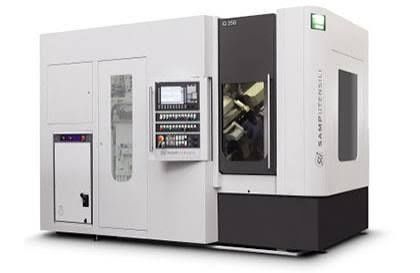
CNC gear grinding machines can coordinate several machine movements electronically. This allows grinding parameters and tooth modifications to be controlled through programmed instructions rather than relying entirely on manual adjustments.
Main Types of Gear Grinding Machines
Different gear designs and production requirements call for different machine configurations. Common categories include:
- Generating grinding machines for continuous production of compatible cylindrical gears.
- Profile grinding machines for specific tooth shapes and complex geometries.
- CNC gear grinding equipment with programmable axes and digital controls.
- Internal gear grinding machines for gears with teeth on an internal surface.
- External gear grinding machines for conventional external tooth forms.
- Automated gear grinding equipment connected with loading, inspection, and material-handling systems.
Industrial gear grinding machines can also differ according to workpiece diameter, gear width, module range, grinding wheel type, spindle arrangement, and available automation.
Importance
Precision gears are used in systems that transfer rotational motion and mechanical power. They appear in vehicles, industrial machinery, robotics, aerospace equipment, energy systems, and many other mechanical applications. The geometry of the gear teeth affects how gears engage with one another and how loads are transmitted through a gearbox.
Precision gear grinding machines are therefore important in the finishing stage of gear manufacturing. Grinding can correct small geometric variations left after previous operations and can produce controlled tooth surfaces.
Accuracy and Gear Performance
A gear contains several geometric features that must work together. These include tooth profile, tooth spacing, helix angle, lead, pitch, and flank characteristics. Variations in these features can influence noise, vibration, contact patterns, and load distribution.
High precision gear grinding machines use controlled machine movements and measurement methods to manage these characteristics. Some systems can also apply programmed profile or lead modifications to suit a particular gear design.
Surface Finish and Heat Treatment
Many gears undergo heat treatment before final grinding. Heat treatment changes the properties of the gear material but can also introduce small dimensional changes. Grinding can be used as a finishing operation after this stage to bring the tooth geometry closer to its specified condition.
The grinding process also requires attention to heat generation. Excessive heat during grinding can affect the material surface, making cooling, wheel selection, grinding parameters, and process monitoring important parts of the overall operation.
Role in Modern Manufacturing
Manufacturing environments increasingly connect individual machines with inspection and production-management systems. Automated gear grinding systems can combine grinding operations with automatic loading, measurement, dressing, and data collection.
This approach can reduce the number of manual transitions between production stages. It can also make process information easier to record and review, particularly when industrial CNC gear grinding systems are connected to broader manufacturing networks.
| Gear Grinding Feature | Typical Function |
|---|---|
| Grinding wheel or worm | Removes material from gear teeth |
| CNC control | Coordinates machine movements |
| Dressing system | Maintains the grinding tool geometry |
| Coolant system | Controls heat and removes grinding debris |
| Measurement system | Checks gear geometry and process results |
| Loading system | Moves workpieces into and out of the machine |
| Process monitoring | Tracks selected operating conditions |
Recent Updates
From 2024 through 2026, developments in gear grinding have generally focused on automation, digital monitoring, more flexible CNC control, improved dressing methods, and integration of inspection with machining. Newer systems increasingly combine several functions within a connected machine environment.
CNC Control and Automated Monitoring
Modern gear grinding machinery is increasingly designed around programmable control and automated process monitoring. Some machines can monitor grinding and dressing conditions and compare measured information with defined process limits. This can help identify process changes during production rather than relying only on final inspection.
Automated measurement is also becoming more closely connected with CNC control. Certain machines can inspect gear geometry and provide information that can be used for process adjustments, depending on the machine configuration.
Advanced Grinding and Dressing Methods
Recent developments include greater use of CNC-controlled dressing, CBN grinding tools, profile modifications, and more flexible grinding strategies. Research has also examined new dressing methods for grinding worms, showing continued technical development in the preparation and control of grinding tools.
CBN, or cubic boron nitride, is an abrasive material used in some gear grinding applications. Its thermal and wear characteristics make it suitable for particular grinding processes, although the appropriate abrasive depends on the workpiece material, machine configuration, and production requirements.
Automation and Data-Based Manufacturing
Automated gear grinding equipment is increasingly connected with robotic loading, inspection equipment, and production data systems. Some industrial systems can combine machining with automatic workpiece handling and process monitoring.
AI and machine learning are also being investigated for areas such as grinding-wheel wear analysis, dressing interval assessment, and process stabilization. These applications remain dependent on suitable sensor data, process models, validation, and appropriate human oversight.
Tools and Resources
Understanding gear grinding requires knowledge of both the gear and the grinding process. Several technical resources can help readers understand how gear grinding machinery operates.
Measurement and Inspection Tools
Gear inspection equipment can measure characteristics such as tooth profile, lead, pitch, runout, and surface condition. Coordinate measuring machines and dedicated gear measurement systems are commonly used in precision manufacturing environments.
Useful resources include:
- Gear measurement guides for understanding profile and lead deviations.
- ISO gear accuracy standards for learning about gear classification.
- CNC programming references for understanding machine-axis control.
- Grinding wheel documentation for learning about abrasive types and applications.
- Process-monitoring documentation for understanding measurement and control methods.
Digital and Educational Resources
Manufacturers of gear grinding equipment publish technical specifications, machine manuals, application notes, and process descriptions. Technical organizations and engineering publications also provide information about gear geometry, grinding processes, abrasive technology, and manufacturing research.
Simulation and process-planning software can help engineers examine gear geometry and machining movements before physical production. Process data platforms can also organize information from CNC machines, inspection systems, and production records.
FAQs
What are gear grinding machines used for?
Gear grinding machines are used to finish gear teeth after earlier manufacturing processes. They can improve tooth geometry, surface characteristics, and dimensional consistency.
How do CNC gear grinding machines work?
CNC gear grinding machines use computer-controlled instructions to coordinate movements between the gear and grinding tool. Multiple axes can be synchronized to produce the required tooth geometry and programmed modifications.
What is the difference between generating and profile grinding?
Generating grinding uses a grinding tool whose movement produces the gear tooth geometry through coordinated motion. Profile grinding uses a shaped grinding wheel to reproduce a defined tooth profile.
Why are precision gear grinding machines important?
Precision gear grinding machines help control characteristics such as tooth profile, lead, pitch, and surface condition. These characteristics influence how gears interact when assembled into mechanical systems.
What are automated gear grinding systems?
Automated gear grinding systems combine grinding equipment with functions such as automatic loading, tool dressing, inspection, process monitoring, and data collection. The exact level of automation varies according to the machine and production environment.
Conclusion
Gear grinding machines are used as finishing equipment for producing accurately controlled gear teeth. Modern systems combine abrasive grinding methods with CNC control, measurement, process monitoring, and automation. Recent developments have focused on connected manufacturing, automated inspection, improved dressing techniques, and data-based process control. These technologies form part of the wider development of precision gear manufacturing equipment and modern industrial production systems.

Related Post...
Spray Coating Machines: An Overview of Modern Coating Technology
Updated: September 19, 2026
Read More
Barrel Finishing Machines: An Overview of Their Uses and Applications
Updated: September 19, 2026
Read More
Die Sorters Guide to Types, Features, and Semiconductor Applications
Updated: September 17, 2026
Read More