Industrial Sanding Machines: Key Features for Reliable Finishing
Surface preparation is an important stage in woodworking, furniture production, panel processing, and other manufacturing operations.
Industrial sanding machines use abrasive materials and controlled mechanical movement to remove surface irregularities, adjust thickness, smooth panels, and prepare components for subsequent finishing.
Unlike small hand-held sanders, industrial systems are designed for continuous or repeated processing of larger quantities of material. Their configuration can include sanding belts, abrasive heads, pressure rollers, feed systems, dust extraction, and digital controls.
Why Industrial Sanding Machines Matter
Wood and wood-based panels can have uneven surfaces, machining marks, variations in thickness, or other imperfections after cutting and shaping. Sanding helps prepare these surfaces for painting, coating, laminating, polishing, or final use.
Industrial sanding equipment can support:
- Surface smoothing
- Thickness calibration
- Removal of machining marks
- Preparation for coatings
- Consistent material processing
- Controlled abrasive removal
- Automated material feeding
- Dust collection
The machine configuration depends on the material, required surface condition, production volume, and desired sanding depth.
How Industrial Sanding Machines Work
The basic principle involves moving a workpiece against an abrasive surface under controlled pressure and speed.
1. Material Feeding
The workpiece enters the machine through a feed system. Depending on the machine, feed rollers, conveyor belts, or other mechanisms move the material through the sanding zone.
Feed speed can be adjusted according to material type, sanding requirements, abrasive characteristics, and machine configuration.
2. Material Positioning
Guide systems help maintain the correct position as the workpiece enters the sanding section.
For panel processing, pressure rollers can hold the material against the conveyor or table while allowing it to move continuously.
3. Abrasive Contact
The sanding head brings the abrasive surface into contact with the material.
Common abrasive formats include:
- Sanding belts
- Abrasive discs
- Sanding drums
- Brush abrasives
- Wide abrasive sheets
The abrasive removes a controlled amount of material from the workpiece surface.
4. Material Removal
As the workpiece passes through the sanding zone, the abrasive removes high points and surface irregularities.
Material removal depends on factors such as:
- Abrasive grit
- Sanding pressure
- Feed speed
- Abrasive speed
- Cutting depth
- Material hardness
Several sanding heads may be used when progressive surface refinement is required.
5. Multi-Stage Sanding
Many industrial sanding machines use multiple sanding units.
A coarse abrasive can perform initial calibration or material removal, while finer abrasives progressively improve the surface.
A typical sequence may look like:
Calibration → Coarse Sanding → Intermediate Sanding → Fine Sanding → Surface Inspection
The exact sequence varies according to the material and finished surface requirements.
6. Dust Extraction
Sanding generates fine dust and abrasive particles. Industrial machines commonly connect to dust extraction systems that collect material generated during processing.
Extraction points may be positioned near each sanding head to capture particles as they are produced.
7. Final Discharge
After sanding, the finished material exits the machine through the discharge section.
It may then proceed to coating, assembly, edge treatment, inspection, or additional sanding depending on the production process.
Main Types of Industrial Sanding Machines
Different sanding machines are designed for specific materials and processing requirements.
| Machine Type | Main Function | Typical Application |
|---|---|---|
| Wide-belt sander | Continuous surface sanding | Wood panels and boards |
| Calibrating sander | Controls thickness | Panel preparation |
| Belt sanding machine | Abrasive belt processing | General surface treatment |
| Disc sander | Disc-based sanding | Component finishing |
| Brush sanding machine | Surface brushing and refinement | Wood surfaces |
| Profile sander | Sands shaped components | Moulded parts |
| Automatic sanding system | Integrated sanding process | Continuous production |
| Orbital sanding system | Fine surface preparation | Selected components |
Key Features of Industrial Sanding Machines
Wide Sanding Belts
Wide belts can process large panels across their entire width. Belt dimensions depend on the machine's working width and application.
Multiple Sanding Heads
Machines with multiple heads can perform different sanding stages in sequence. Each head can use a different abrasive grit or configuration.
Adjustable Feed Speed
Variable feed speed allows the machine to adapt processing conditions to different materials and surface requirements.
Pressure Rollers
Pressure rollers help maintain stable contact between the workpiece and the sanding system. Their configuration varies according to material thickness and machine design.
Automatic Thickness Adjustment
Some machines include automatic systems that measure or control the processing height according to the workpiece thickness.
Digital Controls
Modern industrial sanding machines can use digital controls for feed speed, sanding-head position, pressure settings, and other parameters.
Dust Extraction Connections
Dedicated extraction ports allow sanding machines to connect with central or standalone dust collection systems.
Abrasive Materials Used in Industrial Sanding
Aluminum Oxide
Aluminum oxide abrasives are widely used for general wood and material sanding applications.
Silicon Carbide
Silicon carbide abrasives can be used where a sharper abrasive action or particular surface characteristics are required.
Zirconia Abrasives
Zirconia-based abrasives are used in applications requiring durable abrasive performance.
Ceramic Abrasives
Ceramic abrasives can be used for demanding material-removal applications and specific industrial sanding operations.
The appropriate abrasive depends on the material, required removal rate, surface condition, and sanding stage.
Factors Affecting Sanding Performance
Grit Size
Coarse grits remove more material, while finer grits are generally used for surface refinement.
Feed Rate
A slower feed rate generally increases the time the abrasive remains in contact with the workpiece, while faster feeding reduces contact time.
Sanding Pressure
Pressure affects how aggressively the abrasive interacts with the material. Excessive pressure can generate heat or unwanted surface effects.
Abrasive Speed
The speed of the sanding belt or abrasive head influences material removal and surface characteristics.
Material Hardness
Different wood species and engineered materials respond differently to abrasive processing.
Surface Condition
The initial surface condition determines how much sanding is required before the desired finish is achieved.
Industrial Sanding Machines for Different Materials
Solid Wood
Sanding machines can smooth boards, furniture components, doors, mouldings, and other solid wood products.
MDF and Particleboard
Wide-belt sanding and calibration systems can prepare engineered wood panels for coating, laminating, or assembly.
Plywood
Plywood surfaces can be sanded to remove irregularities and prepare them for subsequent processing.
Veneer
Veneer requires controlled sanding because excessive material removal can affect the thin surface layer.
Laminated Panels
Laminated materials require suitable abrasives and pressure settings to prevent unnecessary damage to the surface layer.
Manual vs. Industrial Sanding
| Feature | Manual Sanding | Industrial Sanding |
|---|---|---|
| Material feeding | Operator controlled | Mechanical feeding |
| Abrasive movement | Hand controlled | Machine controlled |
| Thickness control | Operator dependent | Calibrated or automated |
| Processing speed | Variable | Controlled |
| Multiple sanding stages | Separate operations | Multiple heads possible |
| Dust extraction | Portable or local | Integrated extraction ports |
| Repeatability | Operator dependent | Machine controlled |
Industrial equipment is generally used where repeated and controlled surface processing is required.
Applications of Industrial Sanding Machines
Industrial sanding equipment is used in many manufacturing activities, including:
- Furniture production
- Cabinet manufacturing
- Door manufacturing
- Flooring production
- Wood panel processing
- Plywood processing
- Veneer preparation
- Laminated board processing
- Moulded wood components
- Interior-product manufacturing
The machine configuration depends on the component dimensions, material characteristics, and required surface finish.
Maintenance Considerations
Regular maintenance helps maintain consistent machine operation.
Important areas include:
- Sanding belts
- Abrasive heads
- Pressure rollers
- Feed rollers
- Bearings
- Conveyor surfaces
- Height-adjustment mechanisms
- Dust extraction ducts
- Sensors
- Electrical systems
- Safety devices
Abrasive belts should be inspected for wear, damage, loading, and correct tracking. Replacement intervals depend on material, abrasive type, machine settings, and operating conditions.
Safety Considerations
Industrial sanding machines contain moving belts, rotating components, and dust-generating processes.
Important safety practices include:
- Keeping guards correctly installed
- Checking emergency-stop systems
- Maintaining dust extraction
- Using appropriate personal protective equipment
- Keeping loose clothing away from moving components
- Following lockout procedures during maintenance
- Inspecting abrasive belts before operation
- Following manufacturer operating instructions
Dust-control requirements depend on the material being processed and the workplace environment.
Who Uses Industrial Sanding Machines?
Industrial sanding machines are used by furniture manufacturers, woodworking facilities, panel producers, flooring manufacturers, door manufacturers, and other wood-processing operations.
Operators manage machine settings and material flow, while maintenance teams inspect abrasive systems, drive components, dust extraction, and electrical controls.
Frequently Asked Questions
What are industrial sanding machines?
Industrial sanding machines are mechanical systems that use abrasive belts, discs, brushes, or other abrasive surfaces to smooth, calibrate, and prepare materials for subsequent manufacturing or finishing operations.
What is a wide-belt sanding machine?
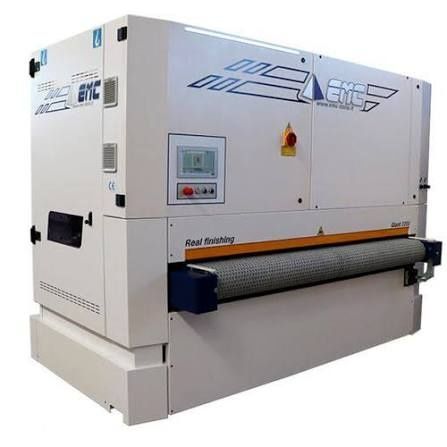
A wide-belt sanding machine uses a broad abrasive belt to process the surface of boards or panels. It can be configured for thickness calibration, surface sanding, or multiple sanding stages.
What grit should be used for industrial sanding?
The appropriate grit depends on the material and processing stage. Coarser grits are generally used for greater material removal, while finer grits are used for surface refinement.
Why is dust extraction important for sanding machines?
Sanding generates fine particles that can accumulate around machinery and in the work environment. Dust extraction systems capture particles generated during sanding and help maintain controlled working conditions.
How should industrial sanding machines be maintained?
Maintenance generally includes checking abrasive belts, rollers, bearings, conveyors, height mechanisms, dust extraction, sensors, electrical systems, and safety components according to manufacturer instructions.
Conclusion
Industrial sanding machines provide controlled abrasive processing for wood, engineered panels, veneers, and other materials. Their main functions include surface smoothing, thickness calibration, machining-mark removal, and preparation for subsequent finishing operations.
Key features include sanding belts, multiple abrasive heads, adjustable feed systems, pressure rollers, thickness controls, digital settings, and dust extraction connections. Machine selection depends on material type, panel dimensions, required surface condition, production volume, and sanding stages.
Understanding these features helps manufacturers select and operate sanding systems that fit their production workflow while maintaining appropriate process control and safety practices.

Related Post...
Industrial Sanding Machines: Key Features for Reliable Finishing
Updated: September 21, 2026
Read More