Pile Driving Machinery: Types, Components, and Uses
Pile driving machinery is used to install piles deep into soil to create foundations for structures that require support below the surface.
Piles transfer structural loads through weak or unstable upper soil layers into stronger soil or rock formations.
Construction projects such as bridges, high-rise buildings, ports, industrial facilities, retaining structures, and offshore platforms can use different pile installation methods depending on soil conditions, pile materials, required depth, and project requirements.
Understanding the types, components, and uses of pile driving machinery helps explain how deep foundation systems are installed and operated.
What Is Pile Driving Machinery?
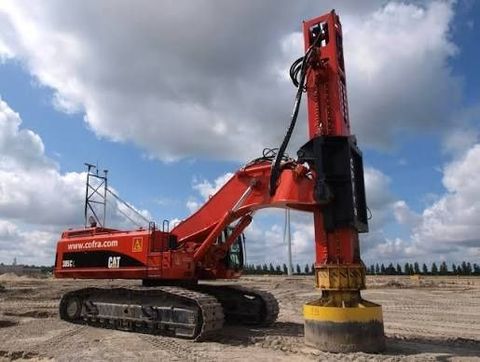
Pile driving machinery consists of equipment designed to position and drive piles into the ground. A typical system includes a leader or mast, pile handling arrangement, driving mechanism, hydraulic system, power unit, and operator controls.
The driving mechanism applies repeated impact, vibration, or continuous pressure to move the pile downward. The appropriate method depends on the pile type, ground conditions, surrounding structures, and installation requirements.
How Pile Driving Machinery Works
The pile installation process generally follows several stages.
1. Site Preparation
The working area is prepared to provide a stable platform for the machinery. Underground utilities, existing structures, access routes, and ground conditions may need to be assessed before installation begins.
2. Machine Positioning
The pile driving machine is positioned at the required pile location. The mast or leader is aligned so that the pile can be installed at the specified position and angle.
3. Pile Placement
The pile is lifted and positioned within the driving system. Piles can be manufactured from steel, concrete, timber, or composite materials depending on the foundation design.
4. Alignment
The pile is checked for vertical or specified inclined alignment. Proper positioning is important because significant deviation can affect the completed foundation system.
5. Driving
The driving mechanism transfers energy to the pile. Impact hammers use repeated blows, while vibratory drivers generate oscillating forces that help move the pile through the soil.
6. Installation Monitoring
Operators and engineers monitor penetration depth, driving resistance, alignment, equipment parameters, and other project-specific measurements.
7. Final Positioning
Once the required installation criteria are reached, the pile driving operation is stopped. The pile may then be cut, capped, or connected to other foundation components according to the structural design.
Types of Pile Driving Machinery
Impact Pile Drivers
Impact pile drivers use a hammer that repeatedly strikes the pile head. Each impact transfers energy into the pile and surrounding soil.
Different hammer configurations can be used according to pile size, material, required penetration, and site conditions.
Diesel Pile Drivers
Diesel hammers use controlled combustion to generate repeated impact energy. They have been used extensively in large-scale foundation and infrastructure projects.
Their operation can involve considerable noise and vibration, so site conditions and nearby structures need to be considered.
Hydraulic Pile Drivers
Hydraulic systems use hydraulic pressure to control the driving mechanism. Hydraulic equipment can provide adjustable operating parameters and may be integrated into modern piling rigs.
Vibratory Pile Drivers
Vibratory pile drivers use high-frequency oscillations to reduce soil resistance around the pile. This allows the pile to move into the ground without relying on repeated impact blows.
Vibratory systems are commonly considered for applications where reduced impact forces are desirable.
Press-In Pile Systems
Press-in systems use hydraulic force to push piles into the ground rather than relying primarily on impact. The equipment can be useful in locations where vibration and noise need to be controlled.
Main Components of Pile Driving Machinery
Leader or Mast
The leader provides structural guidance for the pile and driving mechanism. It helps maintain the required installation direction.
Pile Hammer
The hammer provides the energy required to advance the pile. Depending on the system, it can be hydraulic, diesel, pneumatic, or vibratory.
Hydraulic System
Hydraulic components control various machine functions, including lifting, positioning, hammer operation, and movement.
Power Unit
The power unit supplies energy to the driving and positioning systems. Its configuration varies according to the machine type.
Pile Clamp
A pile clamp holds or guides the pile during handling and installation. Its design must correspond to the dimensions and configuration of the pile.
Winch and Lifting System
Winches and lifting components are used to raise, position, and manipulate piles before and during installation.
Control System
Modern piling machinery can include electronic control systems that allow operators to monitor operating parameters and control machine functions.
Comparison of Pile Driving Methods
| Machinery Type | Main Driving Method | Typical Characteristic | Common Application |
|---|---|---|---|
| Impact driver | Repeated blows | High impact energy | Heavy foundations |
| Diesel driver | Combustion-driven impact | Repeated impact cycles | Large piling projects |
| Hydraulic driver | Hydraulic force | Controlled operation | Construction foundations |
| Vibratory driver | Oscillation | Reduced soil resistance | Steel sheet and foundation piles |
| Press-in system | Hydraulic pressing | Low-impact installation | Noise-sensitive locations |
Factors Affecting Pile Installation
Several factors influence the selection and operation of pile driving machinery.
Soil Conditions
Soil density, strength, layering, groundwater, and the presence of rock can affect penetration resistance.
Pile Material
Steel, concrete, timber, and composite piles respond differently to driving forces. The machinery must be compatible with the pile design.
Pile Dimensions
Pile length, diameter, cross-sectional shape, and weight influence the required equipment capacity.
Required Installation Depth
Deeper piles may require equipment with greater driving energy, lifting capacity, or specialized installation methods.
Site Restrictions
Available working space, access limitations, nearby buildings, overhead obstacles, and ground stability can affect machine selection.
Noise and Vibration
Impact driving can generate significant noise and vibration. In urban or sensitive environments, vibratory or press-in methods may be considered depending on project requirements.
Applications of Pile Driving Machinery
Building Foundations
Pile driving machinery can install deep foundation piles beneath buildings where near-surface soils cannot provide sufficient support.
Bridge Construction
Bridge foundations frequently require piles to transfer loads into deeper soil or rock formations. Pile drivers can be used for both land-based and water-accessible construction areas.
Marine and Port Structures
Piling equipment is used for docks, piers, marine terminals, seawalls, and other structures exposed to water and wave forces.
Industrial Facilities
Industrial buildings, processing facilities, storage structures, and heavy equipment foundations can use pile-supported foundation systems.
Retaining Structures
Sheet piles and other pile configurations can be installed to form retaining walls, excavation support systems, and ground stabilization structures.
Offshore Construction
Specialized piling machinery can be used to install foundation piles for offshore structures where equipment must operate from marine platforms or vessels.
Pile Driving Machinery Maintenance
Regular inspection helps maintain reliable machine operation. Hydraulic lines, connections, hammers, leaders, clamps, winches, fasteners, and structural components should be inspected according to the equipment manufacturer's maintenance requirements.
Wear on hammer components, hoses, cables, bearings, and pile-contact components should be monitored. Lubrication, hydraulic-fluid checks, cleaning, and scheduled component replacement should also follow the applicable equipment procedures.
Safety Considerations
Pile driving involves heavy machinery, suspended loads, high-energy impact, hydraulic pressure, and moving components. Operators and site personnel should maintain controlled work zones and use appropriate protective equipment.
Before operation, the machine should be positioned on stable ground and inspected for mechanical or structural issues. Workers should remain clear of suspended piles, operating hammers, moving machinery, and pressurized hydraulic components.
Site-specific procedures should also address noise, vibration, falling objects, underground utilities, electrical hazards, and nearby structures.
Frequently Asked Questions
What is pile driving machinery used for?
Pile driving machinery is used to install piles into the ground for deep foundation systems, retaining structures, marine construction, bridges, and industrial facilities.
What are the main types of pile driving machinery?
Common types include impact pile drivers, diesel pile drivers, hydraulic pile drivers, vibratory pile drivers, and press-in piling systems.
What are the main components of a pile driver?
Major components can include the leader or mast, pile hammer, hydraulic system, power unit, pile clamp, winch, lifting system, and control system.
How does a vibratory pile driver work?
A vibratory pile driver generates rapid oscillations that reduce resistance between the pile and surrounding soil, allowing the pile to move downward.
How is pile driving equipment selected?
Selection depends on soil conditions, pile material and dimensions, required installation depth, site restrictions, project requirements, and noise or vibration considerations.
Conclusion
Pile driving machinery plays an important role in deep foundation construction by providing the mechanical force needed to install piles into different ground conditions. Impact, diesel, hydraulic, vibratory, and press-in systems use different approaches to achieve pile penetration.
The machine's mast, hammer, hydraulic system, power unit, pile clamp, lifting equipment, and control system work together during installation. Understanding these components and their operating characteristics helps construction teams select suitable equipment for buildings, bridges, marine structures, industrial facilities, and other foundation projects.

Related Post...
Panel Saw Manufacturing: Key Features for Reliable Panel Cutting
Updated: September 21, 2026
Read More