Rotary Indexing Machine: A Complete Guide to Its Working and Applications
A rotary indexing machine is an industrial system designed to move components between multiple workstations arranged around a rotating platform.
It performs a sequence of operations by positioning parts at specific locations, allowing tasks such as assembly, drilling, inspection, filling, and fastening to take place in an organized manner. A rotary indexing machine is commonly used in manufacturing environments where repeated operations require controlled positioning and consistent movement.
The main component is often a rotary indexing table, which rotates a fixture or platform through predefined positions. Depending on the design, the system may use mechanical cams, servo motors, pneumatic mechanisms, or electronic controls. An automatic rotary indexing machine can coordinate rotation with other equipment, reducing the need for manual repositioning between production stages.
Development of Rotary Indexing Technology
Rotary indexing technology developed from mechanical systems used to move materials and tools through repeated manufacturing operations. As production equipment became more automated, indexing mechanisms evolved to include programmable controls, improved positioning systems, and electronic monitoring.
Modern industrial rotary indexing systems can combine mechanical components with sensors, controllers, and specialized software. These systems are used in production environments where multiple operations must occur in a defined sequence.
Main Components of a Rotary Indexing Machine
A typical rotary indexing machine contains several connected components:
- Rotary indexing table: The rotating platform that holds fixtures or workpieces.
- Drive mechanism: A motor, cam, or other mechanism that produces rotational movement.
- Indexing mechanism: Controls the movement and stopping positions of the table.
- Control system: Coordinates the sequence of movements and connected operations.
- Sensors: Detect position, component presence, and selected operating conditions.
- Fixtures and tooling: Hold components securely during processing or assembly.
The configuration depends on the application, required positioning accuracy, production speed, and number of stations.
Importance
Rotary indexing machines are important in manufacturing because they organize repeated operations around a common platform. Instead of moving a component manually between separate work areas, a rotary system can carry it through several processing stages in a controlled sequence.
These machines are used in industries such as automotive manufacturing, electronics, medical equipment production, packaging, and consumer goods assembly. Their applications can range from small precision components to larger industrial assemblies.
Improving Production Organization
A multi station rotary indexing machine allows different operations to take place at separate positions around the same table. While one component is being assembled at one station, another may undergo inspection or fastening at a different station.
This arrangement can reduce unnecessary movement between operations. However, the overall production cycle depends on the time required for each station, the machine's movement sequence, and the complexity of the tasks involved.
Supporting Precision and Repeatability
A precision rotary indexing table is designed to position workpieces at defined angular locations. Accurate positioning is important for operations such as drilling, component insertion, laser marking, and automated inspection.
A precision rotary positioning system may use sensors, mechanical locking arrangements, or servo-controlled movement. The required level of accuracy depends on the product design and the tolerances of the manufacturing process.
Addressing Manufacturing Challenges
Manual positioning can introduce variation, particularly when components pass through several repeated operations. An automated indexing machine helps structure these movements through programmed sequences or mechanical controls.
Nevertheless, indexing equipment requires appropriate maintenance, fixture alignment, and process monitoring. Improper setup or uneven station workloads can affect production consistency and equipment performance.
Recent Updates
Recent developments in rotary indexing technology have focused on digital control, flexible production arrangements, improved monitoring, and integration with automated manufacturing equipment. These developments reflect wider changes in industrial automation rather than a single universal change in machine design.
Servo-Driven and CNC-Based Systems
A CNC rotary indexing table uses computer-controlled movement to position a component or fixture. Servo-driven systems can support adjustable movement profiles, programmable positioning, and integration with other automated equipment.
Unlike fixed mechanical indexing mechanisms, programmable systems can accommodate certain changes in positioning sequences. Their practical flexibility depends on the controller, machine design, tooling, and application requirements.
High-Speed and Automated Indexing
A high speed rotary indexing machine is designed for applications requiring frequent movement between workstations. Its operating performance depends on the table's load, rotation angle, indexing mechanism, and the time needed to complete each station operation.
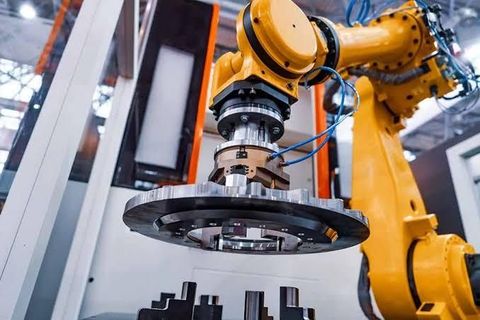
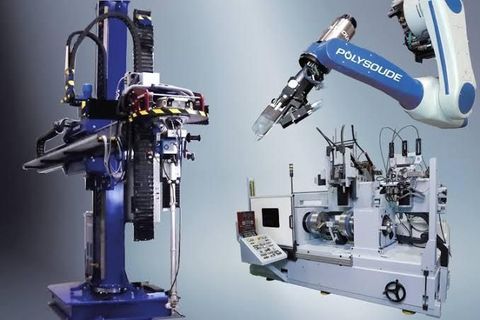
An automated rotary assembly system can combine indexing tables with robotic arms, inspection cameras, feeding equipment, and fastening tools. This arrangement can coordinate several manufacturing activities within one production cell.
Digital Monitoring and System Integration
Modern industrial rotary automation systems may include sensors and digital monitoring features that provide information about position, operating cycles, faults, and equipment status.
Advanced rotary indexing technology is also being integrated into broader production monitoring systems. These connections can help operators identify interruptions and review operating patterns, although they require suitable communication interfaces and system configuration.
| Machine Type | Main Operating Feature | Common Application |
|---|---|---|
| Mechanical rotary indexer | Cam-based or mechanical movement | Repetitive assembly |
| Servo-driven indexing table | Programmable rotational positioning | Flexible manufacturing |
| CNC rotary indexing table | Computer-controlled positioning | Machining and precision operations |
| Multi-station indexing machine | Several operations arranged around a table | Automated assembly |
| High-speed indexing machine | Frequent movement between positions | High-volume production |
Tools and Resources
Selecting and understanding rotary indexing equipment involves reviewing machine specifications, production requirements, and compatibility with existing manufacturing systems.
Machine Selection and Planning Tools
Equipment specifications and engineering resources help explain the differences between indexing mechanisms. Technical drawings, cycle-time worksheets, and production layout templates can be used to plan machine arrangements.
Important factors to examine include:
- Indexing accuracy: The required precision for each workstation.
- Number of stations: The number of operations or positions in the production sequence.
- Table load: The weight and dimensions of the workpieces, fixtures, and tooling.
- Cycle time: The time required to complete the full indexing and processing sequence.
- Control compatibility: The ability to connect the machine with existing controllers and automation equipment.
Engineering Software and Technical Documentation
CAD software can help create machine layouts, fixture designs, and equipment integration drawings. Motion simulation tools can help evaluate movement sequences and identify possible interference between machine components.
Manufacturer technical manuals, industrial automation textbooks, and engineering documentation provide information about rotary indexing equipment, control mechanisms, and maintenance procedures. These resources are also useful for understanding the differences between mechanical and electronic indexing arrangements.
FAQs
What is a rotary indexing machine used for?
A rotary indexing machine moves workpieces between predefined stations for operations such as assembly, drilling, inspection, fastening, and filling. It is commonly used in manufacturing processes involving repeated sequences.
How does an automatic rotary indexing machine work?
An automatic rotary indexing machine uses a mechanical or electronically controlled drive to rotate a table through specific positions. Sensors and control systems coordinate movement with the operations performed at each station.
What factors affect rotary indexing machine price?
Rotary indexing machine price depends on factors such as machine size, number of stations, indexing accuracy, drive technology, control systems, tooling, and integration requirements. Different machine configurations can have substantially different specifications.
What is the difference between a rotary indexing table and a CNC rotary indexing table?
A conventional rotary indexing table may use mechanical stops or fixed indexing mechanisms to position components. A CNC rotary indexing table uses computer-controlled movement, allowing programmable positioning according to the machine's capabilities.
Where is a multi station rotary indexing machine commonly used?
Multi station rotary indexing machines are used in automotive components, electronics, packaging, and general assembly operations. They are suitable for processes in which several tasks can be arranged around a shared rotating platform.
Conclusion
A rotary indexing machine organizes manufacturing operations by moving components through predefined positions on a rotating platform. Its design may include mechanical indexing, servo-driven movement, CNC controls, or integrated automation equipment. Applications range from repetitive assembly to precision machining and inspection. Understanding its components, operating principles, and technical requirements provides a foundation for evaluating its role in modern manufacturing.

Related Post...
Oral Liquid Filling Machine: A Guide to Modern Filling Technology
Updated: September 30, 2026
Read More