Textile Manufacturing Machinery: An Overview of Modern Production Equipment
Textile manufacturing machinery includes the equipment used to convert natural or synthetic fibers into yarn, fabric, and finished textile materials.
Modern textile manufacturing machinery combines mechanical systems, electronic controls, sensors, and automation to support different stages of textile production. Understanding these machines helps explain how raw fibers are processed into consistent textile products.
Why Textile Manufacturing Machinery Matters
Textile production involves several connected processes, and each stage requires specific equipment. Machinery helps control operations such as fiber preparation, spinning, weaving, knitting, dyeing, finishing, and fabric inspection.
Modern equipment can also improve process consistency by controlling parameters such as speed, tension, temperature, pressure, and material flow. Automated monitoring systems can detect changes during production and provide information for process adjustments.
How Textile Manufacturing Machinery Works
Textile manufacturing generally follows a sequence of material-processing stages.
Fiber Preparation
The process begins with opening, cleaning, blending, and preparing fibers. Opening machines separate compressed fiber material, while cleaning equipment removes unwanted particles. Blending systems combine different fibers when a specific material composition is required.
Spinning
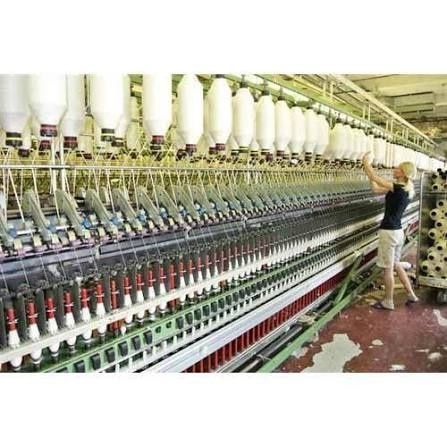
Prepared fibers are converted into yarn through spinning equipment. Drafting systems reduce and align fiber bundles, while twisting systems provide strength and structure to the yarn.
Common spinning technologies include ring spinning, open-end rotor spinning, air-jet spinning, and compact spinning.
Weaving
Weaving machinery creates fabric by interlacing two sets of yarn. The warp yarns run lengthwise, while the weft yarn moves across the fabric.
Modern looms use electronic controls to regulate yarn insertion, tension, speed, and pattern formation. Air-jet, rapier, projectile, and shuttleless looms are examples of equipment used for different textile applications.
Knitting
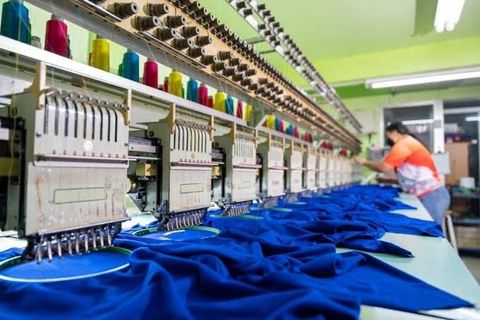
Knitting machines form fabric by creating interconnected loops from yarn. Circular knitting machines are commonly used for tubular fabrics, while flat knitting machines can produce shaped or patterned textile structures.
Electronic pattern controls allow modern knitting equipment to manage stitch density, fabric dimensions, and design characteristics.
Dyeing and Finishing
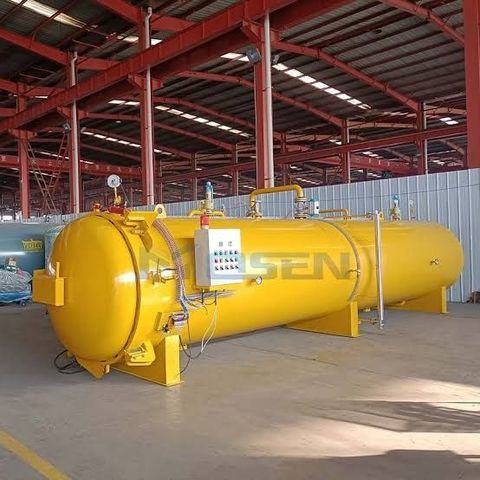
After fabric formation, textile processing equipment can be used for coloration and finishing. Dyeing machinery controls factors such as temperature, chemical concentration, material movement, and processing time.
Finishing equipment can modify properties such as softness, appearance, dimensional stability, water resistance, or surface texture.
Main Types of Textile Manufacturing Machinery
Different machines are designed for specific stages of textile production.
| Machinery Type | Main Function | Typical Production Stage |
|---|---|---|
| Fiber Opening Machines | Separate and loosen fibers | Fiber preparation |
| Carding Machines | Align and clean fibers | Fiber preparation |
| Drawing Machines | Improve fiber alignment | Sliver preparation |
| Spinning Machines | Produce yarn | Yarn production |
| Winding Machines | Prepare yarn packages | Yarn processing |
| Weaving Machines | Interlace yarns | Fabric production |
| Knitting Machines | Form fabric loops | Fabric production |
| Dyeing Machines | Apply color | Textile processing |
| Finishing Machines | Modify fabric properties | Final processing |
| Inspection Machines | Detect fabric defects | Quality inspection |
Key Features of Modern Textile Machinery
Electronic Control Systems
Electronic controllers regulate machine functions and production parameters. Operators can monitor settings such as speed, tension, temperature, and material movement through control interfaces.
Sensors and Monitoring
Sensors can detect conditions such as yarn breakage, fabric movement, tension variation, temperature changes, and machine vibration. Monitoring systems provide information that can help identify process deviations.
Automated Material Handling
Automated systems can move yarn packages, fabric rolls, bobbins, and other materials between production stages. This reduces unnecessary manual movement and helps maintain an organized production flow.
Automatic Adjustment
Some textile machines can automatically adjust operating parameters when production conditions change. Examples include tension control, speed regulation, yarn monitoring, and temperature management.
Digital Production Data
Modern equipment can collect information about machine operation, production quantities, downtime, and process conditions. This data can support production analysis and equipment monitoring.
Factors Affecting Machine Selection
Choosing textile manufacturing machinery depends on the type of material and the intended production process.
Fiber characteristics: Fiber length, strength, fineness, and composition influence equipment requirements.
Yarn specifications: Yarn count, twist, strength, and structure affect spinning and winding equipment.
Fabric construction: Weave type, knit structure, fabric width, and weight influence loom or knitting machine selection.
Production volume: Required output levels influence machine capacity, speed, and automation requirements.
Material compatibility: Equipment should be suitable for the fibers, yarns, dyes, chemicals, and finishing processes being used.
Control requirements: Production lines with complex processes may require advanced sensors, programmable controls, and integrated monitoring.
Manual and Automated Textile Machinery
| Feature | Conventional Machinery | Automated Machinery |
|---|---|---|
| Process Control | More operator involvement | Electronic and automated control |
| Monitoring | Mainly manual | Sensor-based monitoring |
| Adjustments | Manual | Automatic or electronically assisted |
| Data Collection | Limited | Digital production data |
| Material Handling | More manual movement | Greater automation |
| Process Consistency | Depends heavily on operation | Controlled through programmed parameters |
Automation does not eliminate the need for skilled operators. Instead, it changes their role toward machine monitoring, parameter management, troubleshooting, and process control.
Applications of Textile Manufacturing Machinery
Textile machinery is used across many production environments, including:
- Cotton textile production
- Synthetic fiber processing
- Wool and blended textile production
- Technical textiles
- Home textile manufacturing
- Apparel fabric production
- Industrial fabric production
- Nonwoven material production
- Knitted textile production
- Woven fabric manufacturing
Different applications require different combinations of machinery. A yarn production facility, for example, may use fiber preparation, carding, drawing, spinning, and winding equipment, while a fabric facility may focus on weaving or knitting systems.
Maintenance Considerations
Regular maintenance helps textile machinery operate within its intended parameters. Maintenance activities can include cleaning, lubrication, belt and bearing inspection, sensor checks, alignment verification, and replacement of worn components.
Production data can also support condition monitoring. Changes in vibration, temperature, power consumption, or machine performance may indicate that inspection is needed.
A structured maintenance schedule should follow the equipment manufacturer's technical requirements and the operating conditions of the production facility.
Safety Considerations
Textile machinery contains rotating components, moving belts, heated surfaces, electrical systems, and other potential hazards. Guards and protective devices should remain correctly installed during operation.
Operators should receive appropriate training for each machine and follow established procedures for startup, shutdown, cleaning, adjustment, and maintenance. Lockout and isolation procedures are particularly important when maintenance requires access to moving or energized components.
Frequently Asked Questions
What is textile manufacturing machinery?
Textile manufacturing machinery refers to equipment used throughout textile production, from fiber preparation and yarn formation to fabric production, dyeing, finishing, and inspection.
What are the main types of textile machinery?
Major categories include fiber preparation machines, spinning machines, winding machines, weaving machines, knitting machines, dyeing equipment, finishing equipment, and fabric inspection systems.
How does automation affect textile production?
Automation can regulate machine parameters, monitor production conditions, control material movement, collect production data, and reduce the amount of routine manual adjustment required.
What factors determine textile machinery selection?
Important factors include fiber type, yarn specifications, fabric construction, production volume, machine compatibility, automation requirements, and process-control needs.
Why are sensors used in textile machinery?
Sensors can monitor conditions such as yarn tension, material movement, temperature, vibration, and yarn or fabric breaks. This information helps operators identify process changes during production.
Conclusion
Textile manufacturing machinery forms the foundation of modern textile production. Equipment for fiber preparation, spinning, weaving, knitting, dyeing, finishing, and inspection performs different functions while working together as part of an integrated production process.
Modern machines increasingly combine mechanical equipment with electronic controls, sensors, automation, and digital monitoring. Understanding these technologies provides a clearer view of how raw fibers are transformed into yarn, fabric, and finished textile materials.

Related Post...
Gear Grinding Machines: An Overview of Precision Gear Manufacturing
Updated: September 19, 2026
Read More
Industrial Sanding Machines: Key Features for Reliable Finishing
Updated: September 21, 2026
Read More