How Edge Banding Machines Work: A Complete Guide
Furniture panels made from MDF, particleboard, plywood, and other wood-based materials often have exposed edges after cutting.
Edge banding machines apply a narrow strip of material to these edges to create a finished surface and protect the exposed panel core.
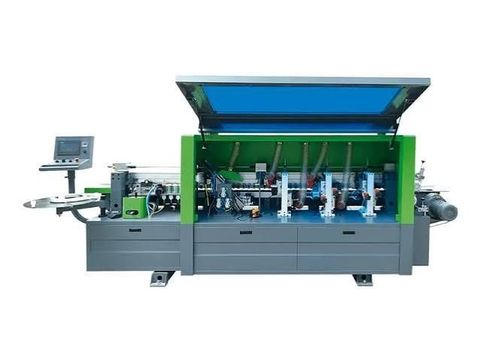
An edge banding machine combines material feeding, adhesive application, pressure rollers, trimming, scraping, and polishing into a coordinated process. Depending on the machine configuration, some systems perform nearly the entire sequence automatically, while simpler models require more operator involvement.
Why Edge Banding Machines Matter
Cutting a wood panel exposes its internal structure along the edges. Edge banding covers this exposed area and creates a more consistent finished appearance.
Edge banding equipment can help control:
- Edge material positioning
- Adhesive distribution
- Bonding pressure
- End trimming
- Top and bottom trimming
- Edge scraping
- Surface polishing
- Material feeding
The exact configuration depends on the panel material, edge band type, adhesive technology, panel dimensions, and production requirements.
How Edge Banding Machines Work
A typical automatic edge banding process moves a panel through several processing units in sequence.
1. Panel Feeding
The panel is placed on the machine's infeed section. Rollers, belts, or conveyor systems move the panel toward the edge-banding units.
The panel must remain properly aligned during feeding because its position determines how accurately the edge material is applied.
Some systems include automatic panel feeding, while others require manual loading.
2. Panel Alignment
Before the edge material is applied, guide systems position the panel against a reference surface.
Alignment mechanisms help maintain a consistent distance between the panel edge and the machine's processing units.
Proper alignment is particularly important when working with narrow panels or when several machining operations follow edge application.
3. Edge Preparation
Some machines include a pre-milling or edge-preparation unit.
This stage can remove small irregularities from a freshly cut panel edge and create a more uniform surface for adhesive bonding.
The need for pre-milling depends on the panel material, cutting quality, and edge-banding process.
4. Adhesive Application
The machine applies adhesive to the panel edge or edge-banding material.
Common adhesive systems include hot-melt technologies and other formulations designed for panel edge bonding.
The adhesive unit controls factors such as:
- Application rate
- Temperature where applicable
- Adhesive distribution
- Contact with the panel edge
Consistent adhesive coverage helps establish a uniform bond between the panel and edge material.
5. Edge Material Feeding
A roll or strip of edge material is fed toward the prepared panel edge.
Common edge materials include:
- PVC
- ABS
- Veneer
- Melamine-based materials
- Solid wood strips
- Other engineered edge materials
The feeding system controls the speed and position of the edge strip as it reaches the panel.
6. Pressure Roller Application
Pressure rollers press the edge material against the adhesive-coated panel edge.
The rollers help maintain contact while the adhesive bonds the two surfaces.
Several rollers may be used to maintain pressure along the panel edge and reduce the possibility of gaps or uneven contact.
7. End Trimming
Once the edge material has been attached, excess material extends beyond the front and rear ends of the panel.
End-trimming units remove this excess material and create a clean transition at both ends.
8. Rough Trimming
The applied edge strip may extend beyond the upper and lower surfaces of the panel.
Rough trimming units remove the larger excess portions while maintaining the basic edge profile.
9. Fine Trimming
Fine-trimming units make a more precise adjustment to the edge material.
This stage helps bring the applied strip closer to the panel surface and prepares the edge for subsequent scraping or polishing.
10. Scraping
Scraping units remove small remaining irregularities from the edge material.
This can help create a smoother transition between the panel surface and the applied edge strip.
Scraper settings depend on the edge material and required finish.
11. Buffing and Polishing
Some edge banding machines include buffing wheels that polish the finished edge.
Buffing can improve the visual appearance of certain edge materials and remove minor surface marks left by earlier machining stages.
Not every edge-banding system includes polishing equipment.
12. Panel Discharge
After the final processing stage, the finished panel exits the machine.
The completed panel can then move to drilling, assembly, inspection, or other furniture-production operations.
Main Types of Edge Banding Machines
Different machine configurations are available for different production requirements.
| Machine Type | Main Characteristic | Typical Use |
|---|---|---|
| Manual edge bander | Operator-controlled feeding | Small-scale panel work |
| Semi-automatic edge bander | Partial automation | Flexible production |
| Automatic edge bander | Integrated processing units | Continuous panel processing |
| Single-sided edge bander | Processes one edge at a time | General panel production |
| Double-sided edge bander | Processes opposite edges | Higher-volume panel processing |
| CNC edge banding system | Computer-controlled operations | Automated furniture production |
| Portable edge bander | Compact equipment | On-site or specialized work |
The appropriate configuration depends on panel dimensions, production volume, edge material, adhesive technology, and available space.
Key Components of Edge Banding Machines
Feeding System
The feeding system moves panels through the machine at a controlled speed.
It can include conveyor belts, rollers, guides, and drive mechanisms.
Pre-Milling Unit
A pre-milling unit can prepare the panel edge before adhesive application. It may remove minor cutting irregularities and create a more consistent bonding surface.
Glue Application Unit
The glue application unit distributes adhesive along the panel edge or edge material. Temperature and application settings depend on the adhesive technology.
Edge Material Magazine
The magazine or feeding system holds and supplies the edge band continuously.
Some machines can work with different edge thicknesses and materials.
Pressure Rollers
Pressure rollers press the edge material against the panel. Roller configuration and pressure settings influence the bonding process.
Trimming Units
Trimming systems remove excess material from the front, rear, upper, and lower sections of the applied edge.
Scraping Unit
The scraping unit removes small machining marks and creates a smoother edge transition.
Buffing Unit
Buffing wheels can polish certain edge materials and improve the final surface appearance.
Edge Materials Used With These Machines
PVC
PVC edge bands are available in different thicknesses, colors, and surface patterns. They are commonly used for furniture and cabinet panels.
ABS
ABS edge materials are used for panel finishing and are available in various surface designs and thicknesses.
Veneer
Wood veneer edge bands can be used when a natural wood appearance is required.
Melamine-Based Edge Materials
These materials can be used with melamine-faced or laminated panels to create a coordinated appearance.
Solid Wood Edges
Solid wood strips can also be applied to selected panel types when a thicker wood edge is required.
Machine compatibility should always be checked before selecting an edge material.
Factors Affecting Edge Banding Performance
Panel Edge Quality
A straight and properly prepared panel edge provides a consistent surface for adhesive bonding.
Adhesive Selection
The adhesive must be compatible with the panel and edge materials. Different adhesive systems have different application requirements.
Edge Thickness
Thicker edge materials may require different feeding, trimming, and pressure settings.
Feed Rate
The panel's movement speed affects adhesive application, bonding time, trimming, and overall processing.
Temperature
For temperature-sensitive adhesive systems, maintaining the specified operating temperature is important for consistent application.
Roller Pressure
Pressure rollers must provide sufficient contact without damaging the edge material or panel surface.
Tool Condition
Dull or improperly adjusted trimming tools can affect edge quality and create uneven surfaces.
Manual vs. Automatic Edge Banding
| Feature | Manual or Semi-Automatic | Automatic |
|---|---|---|
| Panel feeding | Operator controlled | Automated |
| Adhesive application | Machine assisted | Integrated |
| Edge feeding | Operator assisted | Automatic |
| Trimming | Manual or integrated | Integrated |
| Scraping | May require manual work | Automated |
| Buffing | Separate or integrated | Integrated on some systems |
| Production flow | More operator involvement | Continuous processing |
The choice depends on panel volume, product variety, available space, operator requirements, and the desired level of process integration.
Applications of Edge Banding Machines
Edge banding equipment is used in many panel-processing applications, including:
- Kitchen cabinets
- Wardrobes
- Office furniture
- Tables
- Shelving
- Storage cabinets
- Residential furniture
- Commercial furniture
- Interior panels
- Modular furniture
The machine configuration varies according to panel material, edge thickness, furniture design, and production requirements.
Maintenance Considerations
Regular maintenance helps keep edge banding machines operating within their intended conditions.
Important maintenance areas include:
- Glue application components
- Pressure rollers
- Trimming blades
- Scraper blades
- Buffing wheels
- Conveyor belts
- Panel guides
- Heating systems
- Sensors
- Pneumatic components
- Electrical controls
Adhesive buildup should be managed according to the machine manufacturer's cleaning procedures. Cutting tools should also be inspected for wear and correct positioning.
Safety Considerations
Edge banding machines contain moving rollers, cutting tools, heating components, and automated mechanisms.
Important safety practices include:
- Using machine guards
- Keeping hands away from moving components
- Checking emergency-stop systems
- Following adhesive temperature procedures
- Using appropriate personal protective equipment
- Maintaining clear access around the machine
- Performing maintenance with the equipment in a safe state
- Following manufacturer operating instructions
Specific workplace requirements depend on machine design and applicable safety regulations.
Who Uses Edge Banding Machines?
Edge banding machines are used by furniture manufacturers, cabinet producers, woodworking facilities, panel-processing operations, and interior-product manufacturers.
Operators typically load panels, configure processing parameters, monitor the machine, and inspect finished edges. Maintenance personnel handle mechanical, electrical, pneumatic, and adhesive-system checks.
Frequently Asked Questions
What are edge banding machines?
Edge banding machines are woodworking machines that apply a strip of material to the exposed edges of wood-based panels. They can also trim, scrape, and polish the applied edge.
How does an automatic edge banding machine work?
An automatic system feeds a panel through alignment, adhesive application, edge-material feeding, pressure rolling, trimming, scraping, and sometimes polishing stages.
What materials can be used for edge banding?
Common materials include PVC, ABS, veneer, melamine-based edge materials, and solid wood strips. Compatibility depends on the machine and bonding system.
What is the purpose of pre-milling?
Pre-milling prepares the panel edge before bonding by removing minor irregularities from the cut surface. This can provide a more consistent edge for subsequent processing.
How should an edge banding machine be maintained?
Maintenance generally includes cleaning adhesive components, inspecting rollers, replacing worn cutting tools, checking sensors and pneumatic systems, maintaining heating components, and following manufacturer instructions.
Conclusion
Edge banding machines automate the process of applying protective and decorative edge material to wood-based panels. A typical machine moves the panel through alignment, edge preparation, adhesive application, edge feeding, pressure rolling, trimming, scraping, and optional polishing.
Key components include the feeding system, glue application unit, edge-material feeder, pressure rollers, trimming tools, scraping unit, and buffing system. The appropriate machine configuration depends on panel material, edge type, production volume, panel dimensions, adhesive technology, and automation requirements.
Understanding how each stage works makes it easier to evaluate edge-banding equipment and integrate it into furniture, cabinetry, and panel-processing workflows.

Related Post...