Torque Motor System: An Overview of Design and Applications
A torque motor system is an electric motor arrangement designed to produce rotational force, known as torque, often at relatively low speeds.
Unlike conventional motors that may require gearboxes to adjust speed and torque, a direct drive torque motor can connect directly to the driven equipment. These systems are used in industrial machinery, robotics, precision positioning equipment, and automated production environments.
Industrial torque motor systems commonly use electromagnetic principles to convert electrical energy into mechanical rotation. Many modern designs use permanent magnets and electronically controlled windings to generate rotational movement. Their design focuses on torque output, operating speed, thermal behavior, accuracy, and integration with the surrounding machinery.
How Torque Motor Systems Work
A torque motor generates rotational force through the interaction of magnetic fields. Electrical current flows through the motor windings, creating a magnetic field that interacts with permanent magnets or another magnetic field to produce rotation.
Permanent magnet torque motors use magnets within the rotor assembly to generate a magnetic field. Brushless torque motor solutions use electronic controllers instead of mechanical brushes to manage current switching. This arrangement can support precise speed and position control when paired with suitable sensors and control equipment.
Main Components and Design
A typical torque motor system includes several interconnected components:
- Stator: The stationary part containing electrical windings that generate a magnetic field.
- Rotor: The rotating component that interacts with the stator's magnetic field.
- Motor controller: Electronic equipment that regulates current, speed, and torque.
- Position sensors: Devices that measure rotor position or movement when required by the control method.
- Cooling arrangement: A system that manages heat generated during operation.
- Mechanical interface: The structure connecting the motor to the machine or equipment it drives.
Torque motor design and engineering involve selecting these components according to the machine's operating conditions and mechanical requirements.
Importance
Torque motors play an important role in applications where controlled rotational force, smooth movement, and accurate positioning are necessary. They are found in manufacturing equipment, automated machinery, industrial robotics, packaging systems, and specialized motion control applications.
High torque electric motors can support equipment that requires substantial rotational force without operating at high speeds. This can be useful in machinery that handles heavy loads, performs controlled movements, or requires frequent acceleration and deceleration.
Precision and Direct Drive Operation
A direct drive torque motor connects to the driven mechanism without an intermediate gearbox. Removing the gearbox can reduce the number of mechanical transmission components and eliminate certain sources of backlash.
Direct drive servo motor systems are used in applications that require accurate positioning and controlled movement. Examples include rotary tables, indexing equipment, robotic joints, and precision assembly machinery.
However, direct drive designs also have limitations. The motor must be selected according to the required torque, load inertia, operating speed, and thermal conditions. Mechanical alignment and structural stiffness can also affect positioning accuracy.
Industrial Applications
Torque motor for industrial applications can be found across several sectors.
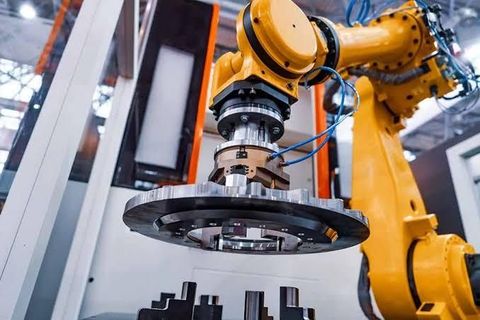
- Robotics: Servo torque motor systems can control joints and rotary movements in industrial robots.
- Machine tools: Precision rotary torque motor systems can drive rotary tables and positioning mechanisms.
- Packaging equipment: Controlled rotation supports winding, indexing, and material handling operations.
- Printing machinery: Torque control helps regulate rollers and material movement.
- Automated production: Industrial torque motor automation supports synchronized movement across connected machinery.
- Testing equipment: Controlled rotational force can be used in mechanical testing and measurement systems.
These applications have different operating requirements. Motor selection depends on the mechanical load, required motion profile, environmental conditions, and control accuracy.
Recent Updates
From 2024 through 2026, developments in industrial motion control have continued to focus on improved electronic control, system integration, energy management, and compact machine design. Torque motor technology is evolving alongside broader developments in industrial automation and digitally controlled equipment.
Advances in Motor Control
Industrial torque motor controllers increasingly use digital control methods to regulate motor current, speed, and position. These controllers can work with feedback devices and motion control software to coordinate movement with other machinery.
High performance torque motor drives may include diagnostic functions that help monitor operating conditions. The available features depend on the controller architecture, communication interfaces, and equipment configuration.
Improved Integration and Thermal Design
Custom industrial torque motors are often developed for machinery with specific space, load, or operating requirements. Design considerations include winding arrangements, rotor dimensions, cooling methods, and mechanical mounting.
Thermal management remains an important area of engineering. Heat generated by electrical resistance and magnetic losses can affect motor performance and operating life. Cooling methods may include natural air circulation, forced-air cooling, or liquid cooling, depending on the motor design.
Digital Motion Control
Advanced industrial motion control systems increasingly connect motor drives with programmable controllers, sensors, and industrial communication networks. These connections allow equipment to exchange operating information and coordinate movement.
Industrial motor torque control can also use feedback to adjust current according to changing load conditions. This is relevant to machinery that experiences varying resistance or requires consistent rotational force during operation.
| Technology | Main Function | Common Application |
|---|---|---|
| Permanent magnet torque motors | Generate rotational force using magnetic fields | Industrial rotary machinery |
| Direct drive torque motors | Drive loads without an intermediate gearbox | Rotary tables and robotics |
| Brushless torque motors | Use electronic switching for motor operation | Automated machinery |
| Servo torque motor systems | Regulate torque, speed, and position | Precision positioning |
| Torque motor drive systems | Coordinate motor power and control | Industrial motion systems |
| Industrial torque motor controllers | Manage motor operation and feedback | Manufacturing equipment |
Tools and Resources
Designing and integrating torque motor systems involves several engineering tools and technical resources. These help engineers understand motor behavior, calculate operating requirements, and evaluate how a motor will work within a machine.
Motor Selection and Design Tools
Motor sizing calculators can help estimate the torque and power required for a particular application. Engineers typically consider load inertia, acceleration, operating speed, duty cycle, and mechanical transmission characteristics.
Simulation software can model electromagnetic behavior, heat transfer, and mechanical movement. These tools support torque motor design and engineering by allowing different design conditions to be examined before physical testing.
Controllers and Integration Resources
Industrial torque motor controllers are configured according to the motor's electrical characteristics and the machine's motion requirements. Manufacturer technical manuals, wiring diagrams, and configuration guides explain controller setup, feedback connections, and operating limits.
Custom torque motor integration may also involve computer-aided design software, motion control platforms, and system testing tools. These resources help engineers assess mechanical fit, electrical compatibility, and communication between components.
Technical publications from organizations such as the International Electrotechnical Commission (IEC) and the Institute of Electrical and Electronics Engineers (IEEE) provide information about relevant electrical and engineering standards.
FAQs
What is an industrial torque motor system?
An industrial torque motor system is an electric motor arrangement designed to generate controlled rotational force for machinery. It may include a motor, controller, feedback sensors, and mechanical mounting components.
What are the advantages of a direct drive torque motor?
A direct drive torque motor operates without an intermediate gearbox. This can reduce mechanical complexity, eliminate gearbox backlash, and support precise rotary movement. Its suitability depends on the application's load and operating conditions.
How do permanent magnet torque motors work?
Permanent magnet torque motors use magnets in the rotor to establish a magnetic field. The interaction between this field and the stator's electrically generated magnetic field produces rotational force.
What are industrial torque motor controllers used for?
Industrial torque motor controllers regulate electrical current and manage motor operation. Depending on their design, they can control torque, speed, and position while processing feedback from sensors.
Where are high torque electric motors commonly used?
High torque electric motors are used in robotics, machine tools, rotary tables, packaging machinery, and industrial positioning equipment. Their applications depend on the required rotational force, speed range, and control accuracy.
Conclusion
Torque motor systems convert electrical energy into controlled rotational force for a wide range of industrial applications. Their design involves motor construction, electromagnetic principles, thermal management, and electronic control. Direct drive systems, permanent magnet technology, and digital motion controllers are important parts of modern industrial motor engineering. Understanding these components and their operating requirements provides a foundation for examining how torque motors support precision movement and automated machinery.

Related Post...

Air Jet Loom: An Overview of Modern High-Speed Weaving Technology
Updated: September 30, 2026
Read More